
Megaways RTP: How Fishin Frenzy Is Built to Return Value
Why RTP in Fishin Frenzy Megaways causes so much confusion
When players search for Fishin Frenzy Megaways RTP, they are usually looking for a simple answer — one number that tells them whether the slot is “worth playing” or not. What they encounter instead is inconsistency. One site claims the RTP is 96.10%. Another shows 95.02%. Some do not mention RTP at all. Others quote player statistics that look completely unrealistic.
This confusion is not accidental, and it is not the result of misinformation alone. It comes from the way modern slot games, especially Megaways titles, are configured, distributed, and presented by casinos.
Fishin Frenzy Megaways does not operate with a single, universal RTP value that applies everywhere. Instead, the game exists in multiple RTP configurations, all officially supported by the provider. The same slot title can behave slightly differently depending on where it is hosted, under which licence, and with which settings enabled by the operator.
For the player, this creates a problem. RTP is supposed to be a transparent metric, yet in practice it often feels hidden, inconsistent, or even misleading. Many reviews simplify the topic by presenting one “default” number, while others ignore the issue entirely. As a result, players either overestimate the importance of RTP or misunderstand what it actually represents.
This page does not exist to sell you a percentage. It exists to explain how RTP works specifically in Fishin Frenzy Megaways, why different values appear across the internet, and how to interpret those numbers without false expectations. If you are looking for certainty in a single figure, you will not find it here. If you are looking for clarity, you will.
What RTP really means in Megaways slots like Fishin Frenzy Megaways
Return to Player, or RTP, is often described as the percentage of money a slot “gives back” to players over time. While this definition is technically correct, it is incomplete, especially when applied to Megaways games.
RTP is a long-term statistical model calculated over millions, sometimes billions, of simulated spins. It does not describe what happens in a single session, a day of play, or even across dozens of bonus rounds. It describes the behaviour of the game over an extreme time horizon that no individual player will ever experience in full.
Megaways slots complicate this further. Unlike traditional slots with fixed paylines, Megaways games dynamically change the number of ways to win on every spin. This introduces much higher variability into outcomes. Wins and losses are not distributed evenly. Instead, they cluster around extremes: long periods of low or no returns, followed by sudden spikes when multiple reels expand and symbols align.
In practical terms, this means that RTP in a Megaways slot is far more “stretched” over time. Two players can both play Fishin Frenzy Megaways under the same RTP configuration and have completely opposite experiences. One may hit a large win early and feel the slot is generous. Another may play for hours without anything notable and conclude the opposite. Both experiences can exist within the same RTP model.
Another common misunderstanding is the assumption that RTP reflects winning chances in a direct or immediate way. A slot with a higher RTP does not guarantee more frequent wins, nor does a lower RTP automatically mean the game is unfair. RTP does not account for volatility, hit frequency, or the emotional pacing of the game. It only describes the theoretical balance between total stakes and total returns over time.
In Fishin Frenzy Megaways, this balance is further influenced by features such as cascading wins, expanding reels, and bonus mechanics that concentrate a large portion of the RTP into rare but significant events. This is why focusing on RTP alone, without understanding how the game distributes that return, often leads to frustration.
To read RTP correctly in this context, it should be treated as a structural parameter, not a promise. It tells you how the game is mathematically designed, not how it will behave for you personally. In Megaways slots, this distinction is not optional — it is essential.
Official RTP values in Fishin Frenzy Megaways
| RTP value | Where it appears | What it represents |
|---|---|---|
| 96.10% | Slot reviews and promotional listings | Higher RTP profile (one valid deployment option) |
| 95.02% | Some casino lobbies / in-game information panels | Alternative RTP profile (also valid, operator-selected) |
One of the most important things to establish early is that there is no single “official” RTP value for Fishin Frenzy Megaways in the sense most players expect. What exists instead is a set of officially supported RTP configurations provided by the developer and deployed by casinos at their discretion.
Across publicly available casino listings, game lobbies, and operator disclosures, two RTP values appear consistently. The first, and most widely advertised, is 96.10%. This figure is commonly presented in slot reviews, comparison sites, and promotional material. For many players, it has become the assumed default RTP of Fishin Frenzy Megaways.
Alongside this, a second value appears with surprising regularity: 95.02%. This RTP is often shown directly within casino interfaces, particularly on regulated platforms that display game information transparently. Its presence is not a mistake, nor is it the result of outdated data. It represents an alternative RTP profile that is equally valid and officially implemented.
Both values describe the same game. The reels, symbols, features, and mechanics remain unchanged. What differs is the long-term return expectation encoded into the mathematics of the slot. This distinction matters because it directly challenges the idea that RTP is an inherent property of the game title itself. In reality, RTP is a configurable parameter.
Slot developers routinely supply operators with multiple RTP options for the same game. This allows casinos to align their offerings with regional regulations, commercial strategies, or portfolio balance. From a technical perspective, switching between RTP profiles does not require altering the visual or mechanical identity of the slot. From a player perspective, however, it changes the long-term return landscape.
It is also worth noting that review sites often choose one RTP value to represent the game globally, even when multiple configurations exist. This simplifies content but sacrifices accuracy. The result is a fragmented information environment where players encounter conflicting numbers without context.
Understanding that both 96.10% and 95.02% are legitimate RTP values is the first step toward interpreting Fishin Frenzy Megaways correctly. The next step is understanding why these differences exist in the first place.
Why RTP differs between casinos in Fishin Frenzy Megaways
- ProviderGame buildReleased with authorised RTP configurations.
- RTP profilesMultiple profilesDifferent long-run return parameters.
- CasinoDeployment choiceOperator selects one RTP profile for that slot instance.
- PlayerDisplayed RTPDifferent percentages can appear across casinos for the same slot title.
The variation in RTP across casinos is not random, and it is not driven by short-term manipulation or player-specific adjustments. It is the result of decisions made at the operator level long before a single spin takes place.
When a casino integrates a slot like Fishin Frenzy Megaways, it typically selects from a predefined set of RTP configurations offered by the provider. This selection can be influenced by several factors. Regulatory frameworks in certain jurisdictions require minimum or maximum RTP thresholds. Commercial considerations may push operators toward slightly lower RTPs to balance promotional costs or bonus structures. In some cases, RTP selection is simply part of a standardised integration package used across a casino’s entire slot portfolio.
From the player’s point of view, this process is largely invisible. Most casinos do not prominently advertise which RTP configuration they are using, and some do not disclose RTP at all unless required by regulation. Even when RTP is displayed, it is often shown without explanation, leaving players unaware that alternative configurations exist elsewhere.
Another layer of complexity comes from regional licensing. The same casino brand may operate under different licences in different markets, each with its own RTP requirements or defaults. This means that two players on the same platform, but in different regions, may technically be playing Fishin Frenzy Megaways under different RTP profiles.
This is why comparing RTP values across review sites, forums, and casino pages often leads to contradictions. Each source may be correct within its own context, yet incomplete when viewed globally.
It is also important to address a common misconception: RTP does not change dynamically during play. Once a casino has selected an RTP configuration, it remains fixed for that instance of the game. There is no adjustment based on session length, betting behaviour, or recent outcomes. The variability players experience comes from volatility and randomness, not from RTP shifting behind the scenes.
The practical implication is straightforward but often overlooked. RTP is a property of the casino-slot combination, not just the slot. Without knowing where you are playing, the RTP figure alone has limited meaning.
For players who care about RTP, the most realistic approach is not to chase the highest advertised number, but to understand that differences exist and that they operate at a structural level. Fishin Frenzy Megaways is a clear example of how modern slot distribution prioritises flexibility for operators, sometimes at the expense of clarity for players.
Base game RTP vs Bonus Buy RTP in Fishin Frenzy Megaways
| Aspect | Base Game | Bonus Buy |
|---|---|---|
| RTP scope | Full game cycle | Isolated feature |
| Volatility | High | Very high |
| Time compression | No | Yes |
| Player expectation | Gradual | Immediate |
One of the least clearly explained aspects of RTP in modern slots is the difference between the base game and optional features such as bonus purchases. Fishin Frenzy Megaways is no exception, and misunderstanding this distinction is one of the main reasons players draw incorrect conclusions about the game’s fairness or profitability.
The base game RTP represents the theoretical return calculated across all standard spins, including occasional naturally triggered bonus rounds. This is the RTP value most often quoted when a casino lists the game’s specifications. It reflects the full mathematical cycle of the slot as designed to be played without shortcuts.
The Bonus Buy feature, on the other hand, operates on a different logic. When players purchase free spins directly, they are effectively skipping large portions of the base game cycle. This changes the distribution of outcomes. Because bonus rounds typically contain a higher concentration of the slot’s total payout potential, the RTP of the Bonus Buy feature is often calculated separately and can appear higher on paper.
In Fishin Frenzy Megaways, this distinction is especially important. A significant portion of the game’s RTP is allocated to its free spins, where expanding reels, multipliers, and cascading wins combine to produce the slot’s most meaningful payouts. When these features are accessed through normal play, they are balanced by long stretches of low-return spins. When they are purchased outright, that balancing process is compressed.
This leads many players to assume that Bonus Buy is “better value” simply because its RTP may be marginally higher. This conclusion is incomplete. A higher RTP in Bonus Buy does not reduce volatility. In fact, it often intensifies it. The player is exposed immediately to the most unstable part of the game’s payout structure, where outcomes vary dramatically from one bonus round to the next.
Another critical point is psychological rather than mathematical. Buying bonuses changes expectations. When players pay a fixed cost for free spins, they tend to measure success against that cost rather than against long-term RTP. This can make losses feel sharper and wins feel less satisfying unless they exceed a mental benchmark.
From a structural perspective, Bonus Buy RTP should be viewed as a separate risk model, not an optimisation of the base game. It offers faster access to high-impact outcomes, but it does not smooth results or guarantee efficiency. In Fishin Frenzy Megaways, both approaches are mathematically valid, but they appeal to very different tolerance levels for variance.
RTP and volatility: how Fishin Frenzy Megaways behaves over time
RTP cannot be meaningfully discussed without addressing volatility, particularly in a Megaways slot. Fishin Frenzy Megaways is built around a high-volatility framework, and this heavily influences how its RTP is experienced by players.
Volatility describes how returns are distributed over time. In low-volatility games, wins occur frequently but tend to be small. In high-volatility games, wins are less frequent but significantly larger when they arrive. Fishin Frenzy Megaways firmly belongs to the latter category.
The Megaways mechanic itself amplifies this effect. With a constantly changing number of ways to win, the game produces a wide range of outcomes from one spin to the next. Most spins resolve with minimal or no return. Occasionally, reel expansions and favourable symbol combinations align, resulting in sharp spikes that account for a disproportionate share of the slot’s total RTP.
This structure creates a disconnect between theoretical RTP and perceived performance. Even with an RTP above 95%, extended losing periods are not only possible but statistically expected. These periods are not evidence of malfunction or manipulation; they are a direct consequence of how the game allocates its return.
Compared to the original Fishin Frenzy, the Megaways version intensifies this dynamic. The classic game distributes wins more evenly, with simpler mechanics and lower variance. The Megaways adaptation shifts much more weight toward rare, high-impact events, particularly within bonus rounds. This makes the RTP feel less accessible, even though it remains mathematically intact.
Understanding this relationship is essential for setting realistic expectations. RTP tells you how the game balances itself in theory. Volatility tells you how uncomfortable that balance may feel in practice. In Fishin Frenzy Megaways, the two work together to create a slot that rewards patience unevenly and punishes short-term assumptions.
For players who are sensitive to prolonged dry spells, RTP alone is a poor guide. The game is not designed to deliver steady feedback. It is designed to deliver concentrated outcomes over uncertain timeframes. Recognising this distinction is often the difference between informed play and unnecessary frustration.
Can you actually verify the RTP in a specific casino?

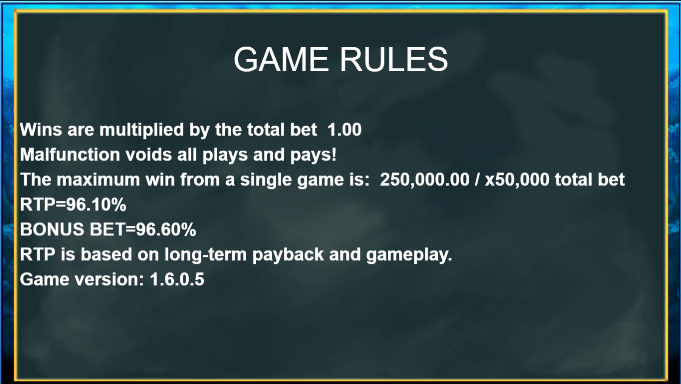
For all the discussion around RTP, one practical question remains unresolved for many players: can you actually confirm which RTP version of Fishin Frenzy Megaways you are playing in a particular casino?
The honest answer is that sometimes you can, and often you cannot.
In certain regulated markets, casinos are required to display RTP information directly within the game interface or on an information panel linked to the slot. When this data is present, it usually reflects the active RTP configuration for that specific game instance. This is the most reliable scenario, as the information comes directly from the operator under regulatory oversight.
However, even in these cases, RTP is often shown without context. Players may see a percentage but have no indication that alternative RTP versions of the same slot exist elsewhere. Without that context, the number appears definitive when it is merely local.
In many casinos, RTP is not displayed at all. Some operators provide only general statements about average RTP across their slot portfolio. Others rely entirely on third-party reviews to communicate game specifications. In these environments, players are left to infer RTP indirectly, often by comparing conflicting sources.
It is also common for casinos to use identical branding and interfaces across multiple jurisdictions while operating under different licences. This creates the illusion of consistency, even when RTP configurations differ behind the scenes. From the user’s perspective, nothing signals that the underlying mathematics may have changed.
What is important to understand is that there is no hidden menu or reliable external tool that allows players to query RTP in real time. RTP is not something you can detect through short-term play, win patterns, or session outcomes. Any attempt to do so is statistically meaningless.
The most realistic approach is to treat RTP information as conditional. If a casino discloses it clearly, you can assume it reflects the configuration you are playing. If it does not, any RTP figure you encounter elsewhere should be treated as indicative rather than definitive. In the case of Fishin Frenzy Megaways, this distinction matters precisely because multiple RTP profiles are known to exist.
Theoretical RTP vs player statistics: why the numbers rarely align
Alongside official RTP figures, many players encounter another category of data: player-reported statistics. These often appear on tracking sites, community dashboards, or forum posts claiming to show the “real” RTP of Fishin Frenzy Megaways based on actual play.
At first glance, this data can be persuasive. Numbers are presented as empirical, sometimes even extreme, suggesting returns far above or below the theoretical RTP. The problem is not that this data is fabricated, but that it is frequently misunderstood.
Theoretical RTP is calculated under controlled conditions across an enormous number of simulated spins. Player statistics, by contrast, are based on limited samples collected from voluntary participation. These samples are almost always biased. Players who experience unusual wins are more likely to report results. Sessions that end quickly or uneventfully are underrepresented. Demo play and real-money play are often mixed without clear distinction.
In high-volatility slots like Fishin Frenzy Megaways, these distortions are amplified. A small number of large wins can skew averages dramatically. Conversely, extended losing streaks can produce data that appears abnormally low. Neither outcome contradicts the theoretical RTP; both are compatible with it.
Another issue is time compression. RTP assumes an extreme time horizon. Player statistics usually represent short or medium-term activity. Comparing the two directly is like comparing climate to weather. One describes long-term equilibrium; the other describes momentary conditions.
This does not mean player statistics are useless. They can offer insight into volatility, variance, and the emotional experience of the game. What they cannot do is replace theoretical RTP as a measure of the slot’s mathematical design.
When player-reported RTP figures are treated as proof that a slot is “hot” or “cold,” expectations become detached from reality. In Fishin Frenzy Megaways, this detachment is particularly risky because the game’s payout structure is designed to produce extremes. Theoretical RTP remains stable even when observed outcomes fluctuate wildly.
Understanding the difference between these two types of data is essential. One explains how the game is built. The other reflects how it feels to play. Confusing the two leads not to better decisions, but to false narratives about fairness, timing, and control.
Common myths about RTP in Fishin Frenzy Megaways
Because RTP is often reduced to a single headline number, it attracts a set of persistent myths. These misconceptions are not harmless. They actively distort how players interpret their experience with Fishin Frenzy Megaways and similar high-volatility slots.
Myth 1: A higher RTP means I will win more often
RTP does not describe win frequency. It describes long-term return. A slot can have a relatively high RTP and still produce long stretches of losses, especially when volatility is high. Fishin Frenzy Megaways concentrates a large share of its RTP into rare outcomes, which means frequent wins are not part of its design, regardless of the percentage shown.
Myth 2: After a long losing streak, the RTP has to “balance out”
This is a classic misunderstanding of probability. RTP does not operate on a memory system. The slot does not track previous outcomes and does not adjust future results to compensate. Each spin in Fishin Frenzy Megaways is independent. Long dry periods are not a signal that a win is due; they are an expected feature of the volatility model.
Myth 3: Bonus Buy is safer because the RTP is higher
A slightly higher RTP in the Bonus Buy feature does not reduce risk. It redistributes it. By entering the most volatile part of the game immediately, players expose themselves to sharper outcome swings. Losses can arrive faster, and wins must clear a psychological threshold to feel meaningful. Safety is not increased; variance is compressed.
Myth 4: RTP changes during play
Once an RTP configuration is set by the casino, it remains fixed. There is no adjustment based on session length, bet size, player behaviour, or recent wins and losses. Perceived changes in generosity are explained by variance, not by dynamic RTP manipulation.
Myth 5: Player statistics reveal the “true” RTP
Short-term data reflects experience, not design. In a game like Fishin Frenzy Megaways, experience is intentionally uneven. Treating anecdotal or community-based statistics as proof of real RTP leads to false confidence or unnecessary suspicion, depending on the outcome observed.
Dispelling these myths does not make the game more predictable, but it does make it more transparent. The fewer assumptions players bring into a session, the closer their expectations align with how the slot actually functions.
FAQ — Fishin Frenzy Megaways RTP
How to interpret RTP in Fishin Frenzy Megaways correctly
If there is one mistake players consistently make when approaching Fishin Frenzy Megaways, it is treating RTP as a verdict rather than a framework. A number is read, a conclusion is drawn, and expectations are formed long before the first spin. When reality fails to match those expectations, the slot is blamed. In most cases, the problem is not the game, but the interpretation.
RTP in Fishin Frenzy Megaways does not exist to tell you what will happen. It exists to describe how the game is mathematically balanced over an extreme time horizon. The fact that multiple RTP configurations are in circulation only reinforces this point. The slot is not defined by a single percentage. It is defined by a structure that remains stable while its long-term return parameter is adjusted by operators.
Understanding this shifts the conversation. Instead of asking which RTP is “the real one,” a more useful question emerges: how does this game distribute its return, and over what kind of timeframe? In Fishin Frenzy Megaways, the answer is clear. Returns are concentrated, delayed, and uneven. Large portions of the RTP are locked behind volatile mechanics, particularly within bonus rounds that may or may not materialise during a given session.
This is why the difference between 95.02% and 96.10% feels far less significant in practice than it appears on paper. Both configurations operate within the same volatility model. Both can produce long stretches of low engagement followed by sudden, disproportionate outcomes. Neither offers consistency, and neither offers control.
The presence of Bonus Buy features adds another layer of complexity, but not clarity. While purchasing bonuses may slightly alter theoretical RTP, it does not simplify the experience. It compresses variance and accelerates exposure to the most unstable part of the game. For some players, this feels more honest. For others, it amplifies frustration. In neither case does it transform the underlying mathematics.
What Fishin Frenzy Megaways demands from the player is not optimism, but alignment. Alignment between expectation and design. Alignment between tolerance for volatility and the way returns are structured. When players enter the game expecting steady feedback or short-term balance, disappointment is almost guaranteed. When they enter with an understanding of how RTP, volatility, and Megaways mechanics interact, the experience becomes clearer, even if it remains unpredictable.
This is why RTP should not be used as a selection tool in isolation. It is a necessary piece of information, but not a sufficient one. In high-volatility slots, it functions more like a boundary than a guide. It tells you the limits of the system, not the path through it.
Fishin Frenzy Megaways is not designed to reward persistence evenly, nor to punish recklessness immediately. It is designed to redistribute value unevenly over time, favouring rare alignment over frequent reassurance. RTP does not soften this reality. It quantifies it.
For players who accept that premise, RTP becomes useful again. Not as a promise of return, but as a lens through which the game’s behaviour makes sense. For those who do not, no percentage will ever feel high enough.
That, ultimately, is the role RTP plays in Fishin Frenzy Megaways. Not to predict outcomes, but to explain why the outcomes feel the way they do.