
Fortune Spins: A Curated Guide to Modern Slot Experiences
A mode that looks more generous than it actually is
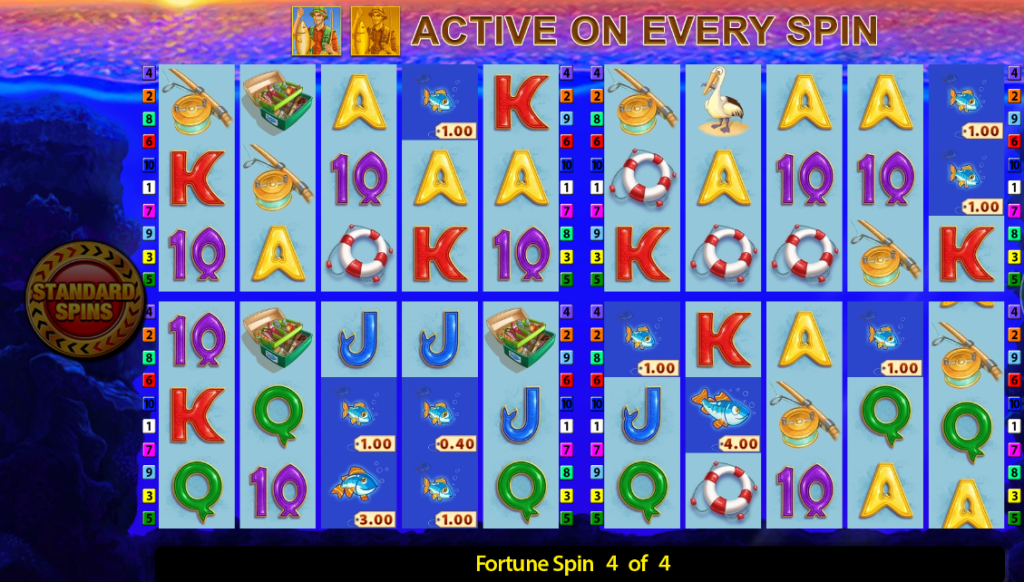
Fishin Frenzy Fortune Spins was not designed to change the mathematics of the game. Its purpose is more subtle — and more effective. It changes how the game feels while leaving its core probability structure untouched. No new symbols are introduced, no payout tables are rewritten, and the RNG remains exactly where it was.
What does change is density. Four game windows spin simultaneously. Visual information increases. Events overlap. The game appears permanently active, even when the outcome itself is neutral. Fortune Spins creates the impression that something meaningful is always about to happen — and that impression is the foundation of the mode.
This is not a bonus and not an upgrade. Fortune Spins is a separate play model, built around perception, rhythm, and expectation rather than mechanical advantage.
Fortune Spins as a standalone game mode
Fortune Spins is not triggered randomly and it is not awarded. Entry is deliberate. The player opts into a different tempo of play, one that removes pauses and replaces them with continuous visual engagement.
Blueprint separated this mode from the base game for a reason. Fortune Spins shifts attention away from individual results and towards session flow. Wins and losses become less isolated. What matters instead is the ongoing sense that value is forming somewhere on the screen.
The mode does not encourage winning. It encourages continuation.
Four windows, one perception
At the centre of Fortune Spins is its four-window architecture. Every spin activates four independent reel sets at once, unfolding in parallel. Mathematically, these are separate events. Psychologically, they merge into a single field of action.
This structure dramatically increases cognitive load. Symbols appear faster, outcomes overlap, and the player’s focus is constantly redirected. Even standard events feel amplified simply because they occur alongside others.
Crucially, this expansion offers no additional control. Four windows do not mean four decisions. They mean four streams of information competing for attention. Fortune Spins increases stimulation without increasing influence.
The 20× Total Bet entry cost
The fixed entry cost of 20× Total Bet is not cosmetic. It defines the mode before play even begins. Fortune Spins is not built for casual exploration or low-commitment sessions.
This threshold reframes expectation. The player enters already invested, already anticipating that the intensity of the mode must justify the cost. As a result, average outcomes feel underwhelming, while stronger moments carry disproportionate emotional weight.
The cost does not increase volatility in a technical sense. It increases pressure — and pressure alters perception far more effectively than mathematics ever could.
Fisherman and Gold Fisherman: scale, not power
In the base game, the Fisherman operates locally. He collects Fish values within a single window, with clear limits and predictable scope.
Fortune Spins introduces the Gold Fisherman, and with him, a change of scale. When he appears, Fish values are collected across all four windows simultaneously. This does not make him more reliable or more frequent. It makes his presence more dramatic.
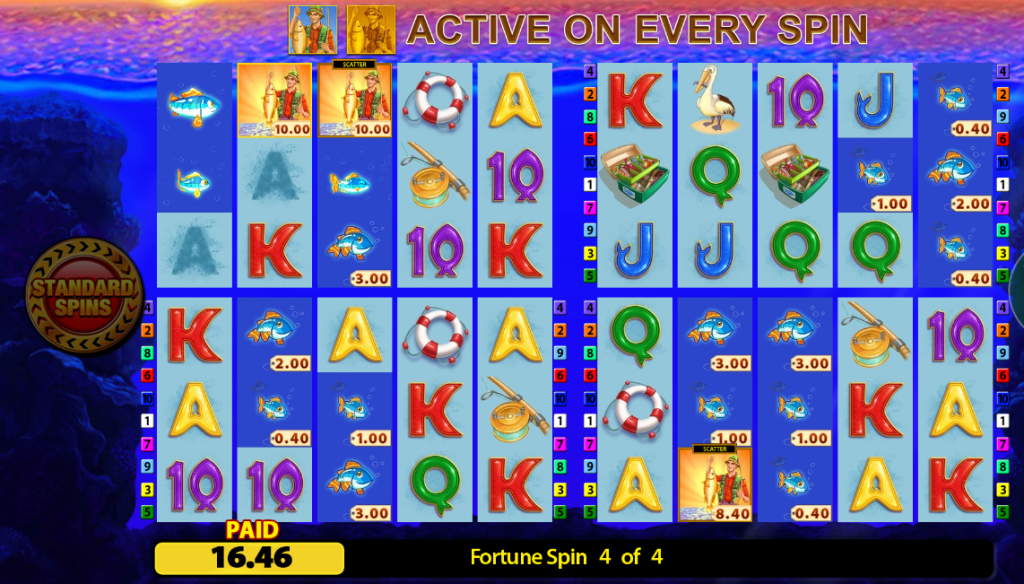
Fish symbols accumulate visibly across the screens, creating a sense of unresolved value. The Gold Fisherman becomes the imagined point of release — not because he is guaranteed, but because the mode constantly displays what could be realised.
Fortune Spins thrives on visible potential. The game does not promise resolution. It simply keeps value in sight.
Fish symbols in Fortune Spins: visible value without resolution
In Fortune Spins, Fish symbols are not rewards. They are placeholders for potential value. Their function is not to pay on their own, but to remain visible long enough to influence expectation.
The four-window layout allows Fish to accumulate across multiple screens at the same time. This creates the impression of growing opportunity, even when no collection mechanism is active. The player is not being rewarded — they are being shown what could be rewarded.
Without a Fisherman on screen, Fish values are effectively frozen. They exist in a suspended state, visible but inaccessible. Fortune Spins relies on this tension. The mode does not hide its potential. It displays it constantly, allowing anticipation to build without committing to outcome.
This design choice shifts attention away from individual spin results and towards unfinished situations. The game becomes less about what just happened and more about what has not yet happened.
RTP in Fortune Spins: why the numbers look better on paper
Fortune Spins is often associated with a higher published RTP than the base game. On paper, the figures appear more generous. In practice, this distinction is frequently misunderstood.
RTP is an average measured over an extended theoretical distance. Fortune Spins compresses more events into a shorter timeframe, but it does not shorten the distance required for that average to stabilise. The perception of improved returns comes from activity density, not from altered payout behaviour.
Because the mode removes visual downtime, losing spins feel less empty. This softens loss perception and makes the session appear more productive, even when the balance movement remains unchanged.
The number looks better. The experience feels busier. The mathematics remains patient.
Fortune Spins versus base play and Free Spins
Fortune Spins does not replace the base game, and it does not function like Free Spins. Each mode occupies a different position within the game’s ecosystem.
The base game is sparse and readable. Outcomes are isolated, and value is revealed quickly. Free Spins, by contrast, operate as a contained volatility spike, temporarily altering rhythm and expectation.
Fortune Spins sits between these two extremes. It does not offer the structural variance of a bonus, nor the clarity of base play. Instead, it creates continuity — a session that feels constantly active, but rarely decisive.
Understanding this distinction matters. Fortune Spins is not designed to deliver moments. It is designed to maintain momentum.
Volatility and the illusion of frequency
Fortune Spins is often described as “more volatile” or “more rewarding” simply because more appears to be happening. This is a misinterpretation of frequency.
The mode increases the number of visible events per unit of time, not the number of meaningful outcomes. As a result, the player experiences a higher rate of stimulation without a proportional increase in resolution.
Small wins blend into the background. Near-misses multiply. Strong results stand out sharply against a dense visual field. Memory becomes selective, shaped by contrast rather than consistency.
This is not a flaw. It is the core design. Fortune Spins transforms volatility into something that feels immediate and frequent, even when it remains statistically unchanged.
Decision pressure and behavioural design
Fortune Spins is not built to reward impatience, but it quietly relies on it. The mode increases the number of unfinished situations visible on screen, and unfinished situations naturally generate pressure to continue.
Fish remain uncollected. Windows reset before attention can settle. The player is rarely given a clear stopping point. Instead, the session feels perpetually “in progress”, even when outcomes are resolved mathematically.
This creates a subtle shift in decision-making. Choices are no longer driven by results, but by momentum. The player does not leave because nothing happened — they stay because something almost happened.
Fortune Spins does not force continuation. It makes stopping feel premature.
Who Fortune Spins is designed for — and who it is not
Fortune Spins appeals to players who value constant engagement over clarity. It suits those who prefer dense visual feedback, continuous motion, and sessions that feel active regardless of outcome.
It is less suited to players who rely on readable patterns, clean resolution, or deliberate pacing. In Fortune Spins, the signal-to-noise ratio is deliberately low. Information is abundant, but conclusions are rare.
This is not a matter of skill or experience. It is a matter of tolerance. Fortune Spins rewards comfort with ambiguity and punishes the need for closure.
Understanding this distinction matters more than understanding any individual feature.
Fortune Spins as a design statement
Blueprint did not create Fortune Spins to offer an advantage. They created it to explore how far presentation can be pushed without altering probability.
The mode demonstrates how rhythm, scale, and visibility can reshape player perception while leaving the underlying system intact. It is an exercise in behavioural design, not generosity.
In this sense, Fortune Spins is less a feature and more a statement: proof that modern slot design often operates on the psychological layer rather than the mathematical one.
Final thoughts
Fishin Frenzy Fortune Spins is not better than the base game, and it is not worse. It is denser, louder, and more demanding of attention.
Its strength lies in how it frames expectation. Its weakness lies in how easily that framing can be mistaken for advantage.
For players who understand what the mode is doing — and why it feels the way it does — Fortune Spins becomes easier to contextualise. Not as a strategy, not as an upgrade, but as a deliberate reconfiguration of how the same game is experienced.
That distinction is the only one that matters.