
For Players: Understanding the True Structure Behind the Fishin’ Frenzy Series
A Series Built on Convergence Rather Than Constant Reward
I have never considered Fishin’ Frenzy to be a “simple fishing slot”, despite the way it is often presented. Its surface is approachable. Its rules are easy to grasp. Its symbols are friendly and its layout uncluttered. Yet beneath that accessible exterior lies a tightly constructed collector architecture that rewards a very particular type of player behaviour.
This page is not written to persuade you to play the series. It is written to clarify whether it suits you at all.
Across its various versions, Fishin’ Frenzy operates on a conditional structure rather than a constant reward rhythm. Most of the emotional intensity is not generated by frequent base game line wins, but by synchronised moments: fish symbols carrying attached values align with the appearance of a fisherman wild. When those two elements converge, the board transforms from passive display into active collection.
That convergence is the structural heart of the series.
If you approach Fishin’ Frenzy expecting steady reinforcement, you may find the experience uneven. If, however, you are comfortable with compressed silence followed by concentrated resolution, you may recognise its internal logic quickly. This distinction matters more than theme, volatility labels, or marketing descriptors.
The core question for any player considering this series is therefore simple:
Do you prefer distributed reward flow, or do you prefer conditional accumulation?
Fishin’ Frenzy is built around the latter.
The base game often functions as spacing. The bonus environment increases interaction density. The fisherman does not merely substitute for a wild symbol; he activates stored value. The fish are not decorative. They represent deferred potential. Until collection occurs, they are visually present but financially dormant.
This creates a psychological tension unique to collector-based slots. You can see value on the screen. You cannot access it without structural alignment.
That tension defines the experience.
The purpose of this page is to examine the series from the perspective of the player rather than from the perspective of feature lists. We will look at who thrives in this environment, who struggles within it, how the base game and bonus phases alter perception, how different versions reshape the rhythm, and why risk often feels different from what the mathematics actually imply.
Fishin’ Frenzy is not a casual pastime disguised as complexity. It is a conditional engine disguised as simplicity.
Understanding that distinction is the first step towards clarity.
The Structural Core: A Collector Series Disguised as a Casual Slot
How the collector chain actually resolves
Fishin’ Frenzy is built on a layered dependency: visible value becomes payable only when the collecting symbol arrives, and the feature phase mainly increases interaction density rather than inventing a separate game.
Fish symbols with attached values appear
Potential is displayed on-screen, but it remains dormant until a collecting event is triggered.
Fisherman wild appears
This is not “just a wild”. It functions as the activation key that converts visible value into realised return.
Collection event resolves the board
Multiple values can collapse into one outcome, which is why results often arrive in concentrated spikes rather than steady trickles.
Bonus phase increases interaction density
The feature environment amplifies how often meaningful combinations appear, tightening the gap between potential and resolution.
At its foundation, Fishin’ Frenzy is not a line-driven slot. It is not constructed around escalating multipliers or cascading chains. It does not rely on intricate reel transformations in its classic form. Its architecture is far more restrained, and precisely because of that restraint, its mechanics become more transparent.
The structural sequence can be reduced to four phases:
Fish values appear.
A fisherman lands.
Collection is triggered.
The bonus environment intensifies probability density.
The first phase introduces visible value. Fish symbols carry attached monetary amounts. They present potential. However, without activation, they do not convert into realised return.
The second phase introduces the fisherman wild. In most versions, this symbol does not merely substitute. It collects. It aggregates the visible values on the screen and converts them into immediate payout.
The third phase is the moment of convergence. When fish and fisherman align, the board resolves tension through accumulation.
The fourth phase appears in the bonus environment, where the probability of interaction increases. Fish density rises. Fisherman frequency may increase. The spacing between potential and resolution narrows.
This is not a rhythm of frequent small reinforcement. It is a rhythm of anticipation and release.
In the base game, you may observe fish symbols accumulating modest values across the reels. You may experience several spins where potential is visible but unrealised. When the fisherman appears, those dormant values are unlocked in a single event. The payout spike often feels disproportionate to the preceding silence.
That imbalance is not accidental. It is structural.
The game distributes emotional weight unevenly across time. The base game stretches expectation. The collector event compresses resolution. The free spins phase amplifies density and increases the likelihood of repeated collection moments within a short window.
This creates what I describe as concentrated variance. Rather than smoothing outcomes across continuous micro-wins, Fishin’ Frenzy clusters impact.
For players who require constant reinforcement, this can feel sparse. For players who appreciate episodic spikes, it can feel precise.
Importantly, the collector mechanic introduces a visible dependency model. You are not merely waiting for a generic high-value combination. You are waiting for alignment between two clearly defined elements. This clarity changes perception. It makes the mechanic legible. It also makes near-misses more psychologically pronounced.
Seeing multiple fish with attached values but no fisherman does not feel neutral. It feels incomplete.
That incompleteness is the engine of engagement.
Unlike scatter-based slots, where bonus activation is often the sole structural pivot, Fishin’ Frenzy embeds its collector interaction in both the base game and the bonus. The bonus does not introduce a new mechanic; it amplifies an existing one. It increases the frequency of meaningful convergence rather than replacing the underlying logic.
This continuity across phases contributes to the series’ recognisable identity. Each version may introduce variation — altered reel structures, added trails, enhanced fisherman behaviours — yet the core conditional framework remains consistent.
You are not playing for lines. You are playing for synchronisation.
The simplicity of presentation can obscure this reality. Bright fish icons and nautical motifs may suggest casual entertainment. In truth, the mechanic demands patience and behavioural discipline. The most valuable moments are not evenly spaced. They are clustered.
The distinction between a rhythm slot and a convergence slot is subtle but decisive. Rhythm slots reward persistence with frequent, moderate reinforcement. Convergence slots reward alignment with concentrated release.
Fishin’ Frenzy belongs to the second category.
Before assessing whether the series suits you, it is essential to accept that premise. Once understood, the subsequent behavioural implications become easier to recognise.
The Player Archetypes: Who Thrives in a Convergence-Driven Environment
Where you are likely to fit in the series
Use this matrix as a quick self-check. It does not predict outcomes; it simply matches player behaviour to a convergence-driven collector structure.
| You Will Likely Enjoy Fishin’ Frenzy If… | You May Struggle If… |
|---|---|
|
|
Every slot series silently selects its audience. It does not do so through theme or branding, but through structural preference. Fishin’ Frenzy is no exception. Its collector framework favours certain behavioural patterns and quietly resists others.
The player who thrives here is not defined by budget size or experience level. They are defined by temperament.
The first archetype is the patience-oriented player. This individual does not require continuous confirmation that the game is “working”. They understand that visible value is not identical to realised value. When fish symbols land with attached amounts, they register potential without immediately expecting conversion. They are comfortable with deferred resolution.
In Fishin’ Frenzy, this temperament is essential. Many spins will show partial configurations: one fish, two fish, perhaps modest line wins. Occasionally, several fish values will accumulate without activation. The patience-oriented player does not interpret this as malfunction or imbalance. They interpret it as structural spacing.
This spacing is deliberate. It builds tension without guaranteeing outcome.
The second archetype is the concentration seeker. Some players prefer distributed micro-wins that sustain a steady rhythm. Others prefer concentrated moments that interrupt silence with decisive impact. Fishin’ Frenzy rewards the latter preference.
When the fisherman wild appears alongside value-bearing fish, the resulting collection can feel disproportionately strong relative to the preceding base spins. That intensity is compressed into a single moment. It is not smoothed across ten minor events. The concentration seeker appreciates this episodic structure. They value sharp resolution over constant reinforcement.
This does not mean the series produces larger returns than other slots. It means it distributes emotional weight differently. The concentration seeker recognises and accepts that difference.
The third archetype is the mechanic-focused player. This individual does not simply spin; they observe interaction. They notice dependencies between elements. They recognise that fish without fisherman are inert, and fisherman without fish is structurally neutral. They understand that alignment is the key variable.
Fishin’ Frenzy is unusually transparent in this respect. Its conditional logic is visible. It does not conceal activation behind complex animations or hidden multipliers. The mechanic-focused player finds this clarity satisfying. The rules are legible. The dependency model is explicit.
Such players often prefer environments where outcomes feel logically connected rather than purely abstract. The visible collector dynamic reinforces this perception. Even though probability remains independent on each spin, the structural narrative appears coherent.
There is also a quieter archetype that performs well in this series: the bonus-phase strategist. Not a strategist in the sense of altering mathematical expectation, but in the sense of adjusting behavioural pacing once the free spins environment begins.
In Fishin’ Frenzy, the bonus does not introduce novelty. It amplifies existing mechanics. Fish appear more frequently. Collection moments cluster. The strategist recognises that the bonus is an intensity phase, not a guarantee phase. They approach it with measured expectation rather than impulsive escalation.
This composure preserves clarity.
Across all these archetypes, a common trait emerges: emotional regulation. Fishin’ Frenzy rewards players who can tolerate visible potential without immediate fulfilment. It suits those who understand that structural design does not bend to desire.
The game does not promise regular comfort. It offers conditional release.
For players aligned with this pattern, the experience feels coherent. The silence makes sense. The spikes feel earned within the system. The collector mechanic becomes an identifiable rhythm rather than a source of frustration.
However, where alignment exists, friction inevitably follows for others. The same structural clarity that appeals to one temperament may irritate another. The next section examines that friction directly.
When Structure and Behaviour Collide: Why Some Players Struggle
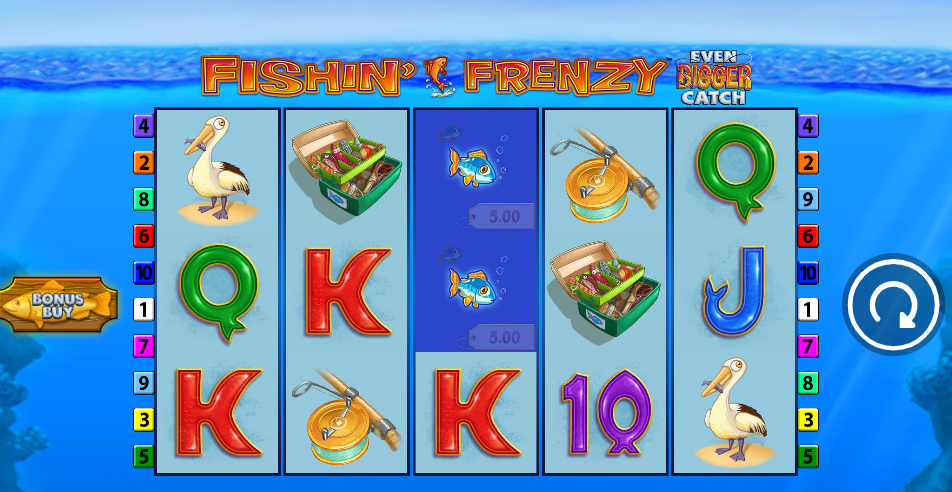
For every player who aligns naturally with the Fishin’ Frenzy architecture, there is another who finds it quietly resistant. The resistance is not technical. It is behavioural. The design does not accommodate every expectation equally.
The most common point of friction appears in the frequency-driven player. This player evaluates engagement by continuity. They prefer small but regular reinforcement. Even modest line wins serve a purpose: they maintain rhythm and sustain the perception of momentum.
Fishin’ Frenzy does not prioritise that rhythm.
In its base form, the series frequently allows several spins to pass with minimal activity beyond standard line interactions. Fish symbols may appear, but without the fisherman they do not convert into meaningful spikes. The frequency-driven player can interpret this spacing as stagnation rather than structural pacing.
The absence of constant reinforcement can feel like absence of progress.
Yet progress in this series is not measured by incremental gains. It is measured by conditional alignment. That difference creates tension for players who equate motion with reward.
Another point of friction emerges with the escalation-oriented player. This behavioural profile is characterised by stake adjustment in response to near-events. When two scatters appear, when several fish accumulate, when the board visually suggests proximity to a bonus, the escalation-oriented player may increase stake under the belief that the next spin is “due”.
Fishin’ Frenzy is particularly capable of provoking this impulse.
The visible fish values amplify anticipation. Seeing monetary amounts displayed but not collected produces a sense of incomplete resolution. When the fisherman fails to appear, the visual narrative suggests something narrowly missed. However, the mathematics remain independent. Each spin resets probability. The system does not remember prior partial alignments.
For the escalation-oriented player, this independence can feel counterintuitive. The clarity of the mechanic paradoxically intensifies the illusion of proximity. The board looks as though it is assembling towards something, even though each spin remains statistically isolated.
This is where structural transparency meets behavioural bias.
The chase-oriented player also experiences friction within this series. This archetype is less concerned with rhythm and more concerned with recapturing loss through decisive events. They are drawn to slots that promise large singular outcomes capable of reversing trajectory.
Fishin’ Frenzy does produce concentrated collection moments, particularly in its bonus phases. However, these moments are bounded within configured probability distributions. The collector mechanic can create satisfying spikes, but it does not transform the underlying return model.
When a chase-oriented player interprets a strong collection event as evidence of recoverability, they risk misreading structural volatility as opportunity.
The series does not resist chase behaviour overtly. It simply does not reward it reliably.
A further friction point arises with players who interpret visible value as guaranteed value. The fish symbols display attached amounts clearly. They appear tangible. For some players, this visibility creates an implicit sense of ownership before activation occurs.
Without the fisherman, those values are unrealised. Yet visually, they appear almost secured. When they disappear on the next spin without collection, the experience can feel like forfeiture rather than statistical reset.
This perception gap is central to understanding friction within the series.
The mechanic-focused player recognises that fish without fisherman carry no realised value. The expectation-driven player may subconsciously assign weight to those amounts before activation. When alignment fails, the disappointment feels disproportionate.
Fishin’ Frenzy does not conceal its conditions. It displays them. But display does not eliminate misinterpretation.
The bonus phase can also generate friction for certain players. When free spins begin, interaction density increases. Fish values may appear more frequently. Fisherman events may cluster. The environment feels more active. However, increased density does not imply guaranteed escalation.
Some players enter the bonus with the expectation of cumulative expansion. They may anticipate that successive collection events will scale progressively. In reality, each bonus spin remains probabilistically independent within the configured structure.
The bonus intensifies opportunity. It does not promise acceleration.
For players who equate bonus activation with inevitable advantage, this can produce dissonance. A moderate bonus outcome may feel underwhelming relative to anticipation, even though it aligns perfectly with volatility classification.
Another behavioural mismatch occurs in players who prefer high mechanical complexity. Later versions of the series introduce additional layers, such as enhanced fisherman behaviours or trail-style progression within the bonus. Yet the core identity remains straightforward.
For players seeking cascading reels, dynamic symbol transformations, or evolving multipliers, the foundational simplicity of Fishin’ Frenzy may feel static. The collector mechanic, while clear, does not generate the layered unpredictability of more intricate architectures.
It is important to recognise that simplicity is not deficiency. It is a design choice. However, design choice determines audience compatibility.
Where friction becomes most pronounced is at the intersection of near-miss perception and conditional activation. When two bonus scatters land and the third does not, when several fish display attractive values without collection, when the board appears to hover on the edge of resolution, anticipation intensifies.
The game’s visual design subtly reinforces this moment. Pauses in reel animation, sound cues, and symbol emphasis amplify attention. These elements heighten perception without altering probability.
Players who interpret heightened perception as increased likelihood may feel misled. Players who understand that perception and probability operate independently experience less dissonance.
The distinction lies not in mathematics, but in interpretation.
Fishin’ Frenzy does not punish impatience. It simply does not accommodate it comfortably. It does not reward impulsive escalation. It does not respond to perceived proximity. It remains consistent within its conditional logic.
For players whose behavioural patterns conflict with this consistency, the experience may feel uneven or frustrating. For players whose temperament aligns with conditional release and visible dependency, the same structure feels coherent.
The slot itself does not change. The alignment between player behaviour and structural design determines satisfaction.
Base Game Compression and Emotional Spikes
Seeing compression and spikes on a single timeline
This is a conceptual intensity curve, not a promise of results. It visualises why short play can feel quiet, and why feature phases often feel suddenly dense.
To understand the experiential identity of Fishin’ Frenzy, one must examine how it distributes emotional intensity across phases.
The base game is intentionally compressed. This does not mean it is inactive. Standard line wins occur. Fish symbols appear with attached values. Occasionally, modest collection events occur even outside the bonus. However, the base game rarely attempts to sustain a constant stream of reinforcement.
Instead, it functions as spacing.
Spacing serves two purposes. First, it preserves volatility classification by preventing excessive smoothing. Second, it heightens the impact of collection events when they occur. Silence is not emptiness. It is structural contrast.
When several spins pass without meaningful convergence, anticipation accumulates. The appearance of a fisherman alongside multiple value-bearing fish releases that tension in a single aggregated payout. The emotional spike feels sharper because it interrupts compression.
This pattern differs from slots that distribute similar total return across frequent minor interactions. In those environments, reinforcement is diluted but steady. In Fishin’ Frenzy, reinforcement is clustered.
The clustering effect becomes more pronounced in the bonus phase. Free spins increase interaction density. Fish appear more frequently. The probability of fisherman alignment within the limited bonus window rises relative to the base game. This does not guarantee larger outcomes, but it increases the frequency of collection events within a compressed timeframe.
The bonus therefore functions as a density amplifier.
Players often describe the bonus as the “real game”. Structurally, this description is understandable. The mechanic operates continuously in both phases, but the bonus reduces spacing. It accelerates the visible cycle of potential and resolution.
However, this acceleration does not transform variance into stability. Concentrated spikes can occur, but they are bounded. The bonus may deliver multiple collection events, yet it may also conclude with moderate returns. Its intensity lies in density, not in certainty.
The psychological contrast between base compression and bonus density shapes perception. During extended base sequences, players may experience subdued engagement. Upon bonus entry, sensory stimulation increases: more fish, more visual value, more frequent alignment opportunities.
The shift feels significant.
Yet mathematically, the overall return model remains integrated across both phases. The bonus does not operate independently of the base game. It redistributes probability within a limited window.
For players attuned to phase shifts, this creates an identifiable rhythm: spacing, convergence, amplification, reset.
For players expecting continuous escalation, the reset can feel abrupt. After the bonus concludes, the game returns to base compression. The reduction in density may feel like decline, even though it represents structural normality.
Emotional spikes are most effective when contrasted against calm. Fishin’ Frenzy leverages this principle consistently. The collector mechanic would feel less impactful if it occurred every few spins. By spacing events, the game preserves their perceived weight.
This design also influences session pacing. Short sessions may capture only base compression without meaningful convergence. Medium sessions may reveal one or two concentrated spikes. Extended sessions allow the player to observe the repeating cycle of compression and amplification.
Understanding this cycle is essential for expectation management.
The base game is not a waiting room for the bonus. It is part of the same conditional system. It presents visible potential that may or may not align. The bonus intensifies that alignment temporarily.
The experience is therefore cyclical rather than progressive.
Players who interpret cycles as natural variance are more likely to perceive coherence. Players who interpret compression as stagnation and amplification as entitlement may struggle with the reset.
Fishin’ Frenzy does not disguise its identity. It compresses emotion deliberately and releases it selectively. The collector event remains the axis around which both phases rotate.
Recognising this axis allows the player to approach the series with structural clarity rather than emotional assumption.
The Evolution of the Series: How Each Version Reshapes the Experience
How each edition reshapes the same collector foundation
Every version preserves the convergence model. What changes is rhythm, density and how visibly layered the bonus phase becomes.
| Version | Base Rhythm | Bonus Density | Complexity Level | Best Suited For |
|---|---|---|---|---|
| Classic Fishin’ Frenzy | Clear spacing with visible collector dependency | Noticeably higher than base, but structurally simple | Low to moderate | Players who value mechanical clarity and transparent convergence |
| Fortune-style Variations | Similar core pacing with heightened event intensity | Increased interaction within feature windows | Moderate | Those comfortable with sharper spikes and stronger volatility perception |
| Megaways Edition | More dynamic reel motion with fluctuating combinations | Collector logic embedded within expanded reel structure | Moderate to elevated | Players who enjoy additional visual movement without losing the collector core |
| The Big Catch / Enhanced Variants | Structured around progression within the feature | Layered and potentially cumulative during free spins | Higher | Players who prefer visible feature development and multi-stage bonus design |
Fishin’ Frenzy has not remained static. Over time, the series has expanded into multiple versions, each preserving the collector foundation while adjusting density, pacing, and structural emphasis. The differences are not cosmetic. They subtly alter how the player experiences conditional convergence.
The classic Fishin’ Frenzy establishes the blueprint. Five reels. Clear fish values. A fisherman wild that collects. Free spins that amplify density. Its strength lies in mechanical transparency. The player sees exactly what is required for conversion. There are no hidden layers. The experience feels deliberate and readable.
This version suits players who prefer clarity over complexity. Its rhythm is defined by spacing and occasional concentrated collection. Nothing distracts from the dependency model. Fish and fisherman remain the central dialogue.
Fortune-style variations introduce heightened event intensity. These versions may include optional modes that increase volatility or amplify collector frequency in exchange for higher stake exposure. The underlying mechanic remains intact, but the tempo shifts.
For some players, this adjustment sharpens engagement. The spacing between meaningful interactions may narrow. For others, it intensifies risk perception. The core principle remains unchanged: alignment governs outcome. What shifts is density, not probability independence.
Megaways editions reshape the base rhythm more dramatically. Variable reel heights introduce fluctuating line counts, expanding the visual field. This does not replace the collector mechanic. Instead, it embeds it within a more dynamic reel structure.
The result is a hybrid experience. The base game feels more active due to expanded combinations, yet the collector event still defines emotional spikes. Players who prefer more visual motion without abandoning conditional collection may find this version compelling. However, it also introduces additional variance through reel height fluctuation.
The Big Catch-style versions introduce progression within the bonus. Trail systems, incremental upgrades, or evolving fisherman behaviour alter how the bonus unfolds. Rather than independent collection events within free spins, there may be cumulative advancement.
This adjustment changes perception. The bonus can feel less episodic and more layered. Each collection may contribute to forward movement. For players who prefer visible progression within a feature, this design increases engagement.
Even more elaborate versions may incorporate chained interactions, enhanced collectors, or expanded bonus pathways. Complexity increases. Yet even here, the foundation remains recognisable: fish represent potential; fisherman converts potential into realised return.
Across all iterations, the series preserves its identity as a convergence-based system. What evolves is how frequently convergence appears, how dense the bonus becomes, and how progression is framed within the feature.
Choosing between versions is therefore less about volatility labels and more about experiential preference. Do you prefer mechanical purity, enhanced density, dynamic reels, or layered bonus progression?
Each variation adjusts pacing while retaining the collector spine.
Session Identity: Short, Medium, and Extended Exposure
How exposure length shapes perception
This model illustrates how session duration, not stake size, determines what part of the variance cycle you are likely to observe.
Short Exposure
Fragmented experience. You may encounter only base compression or a single spike without seeing the wider structural rhythm.
Medium Exposure
Recognisable pattern. Spacing and convergence begin to form a visible cycle rather than isolated events.
Extended Exposure
Full cycle visibility. Compression, collection and density phases become contextually understandable.
Beyond version choice, session length plays a decisive role in perception. Fishin’ Frenzy behaves differently across exposure windows, not because probability changes, but because variance reveals itself unevenly over time.
In short sessions, the experience often feels binary. A handful of base spins may pass without meaningful convergence. If no fisherman alignment occurs, the session can end with minimal interaction. Alternatively, a single collection event may dominate perception.
This binary quality defines micro exposure. It does not reveal rhythm. It captures fragments.
Medium sessions allow pattern recognition. Players may observe base compression followed by one or two collector spikes. If a bonus phase appears, density becomes briefly visible. The cyclical structure begins to emerge.
Extended sessions reveal the architecture more clearly. Spacing, convergence, amplification, reset. The sequence repeats. Emotional spikes are contextualised within longer compression phases. Volatility classification becomes perceptible rather than theoretical.
Importantly, stake size does not alter structural probability per spin. It alters exposure length. Higher stakes reduce the number of spins available within a fixed balance. Lower stakes extend observation.
Session identity therefore influences psychological interpretation more than mathematical configuration. A short session may feel harsh. A longer session may feel balanced. Both operate under identical probability rules.
Players who recognise this distinction approach the series with greater clarity.
Risk Perception Versus Structural Reality
Structural clarity before interpretation
The friendly theme of Fishin’ Frenzy can obscure its risk profile. Nautical motifs and bright fish icons do not equate to low volatility. Visual tone and mathematical distribution operate independently.
Because the collector mechanic produces concentrated spikes, risk often feels amplified in short windows. A prolonged base compression phase may create the impression of tightening probability. Conversely, a strong collection event may create the impression of favourable momentum.
Neither perception alters the configured return model.
The visibility of fish values also influences risk perception. Seeing monetary amounts displayed encourages attachment. When collection fails to occur, disappointment may feel personal rather than statistical. The structure remains neutral. Perception adds weight.
Understanding that each spin operates independently protects against misinterpretation. Near-miss events, visible fish clusters, and partial scatter configurations intensify anticipation without increasing likelihood. The system does not accumulate obligation.
RTP remains a long-term theoretical model. It cannot be confirmed within a single session, whether brief or extended. The bonus does not override base probability. It redistributes interaction density within a defined window.
Players who separate perception from structure maintain greater behavioural stability. They experience spikes without overestimating significance. They tolerate compression without assuming inevitability.
Risk is not reduced by familiarity with the mechanic. It is clarified.
FAQ
Common questions clarified
Is Fishin’ Frenzy suitable for inexperienced players?
Does the series depend too heavily on bonus features?
Are newer versions more volatile than the original?
Does the fisherman increase overall RTP?
Why does the game often feel close to a significant event?
Can a short session accurately represent the series?
Clarity Before Commitment
Fishin’ Frenzy does not attempt to disguise its mechanics. It presents them openly. Fish carry value. Fisherman collects. Bonus increases density. The system is legible.
What determines suitability is not stake size or experience level, but behavioural alignment.
If you prefer constant reinforcement, the spacing may frustrate you. If you appreciate conditional release and visible dependency, the structure may feel coherent. If you escalate stake based on perceived proximity, the system will not respond differently. If you regulate expectation and recognise independence, volatility becomes easier to interpret.
Across its various versions, the series evolves in presentation and pacing, yet it preserves a consistent spine. Convergence governs outcome. Density shifts between phases. Emotional spikes cluster rather than distribute.
There is no universal slot that suits every temperament. Fishin’ Frenzy is precise in its design. It rewards patience, clarity, and measured engagement. It resists impulsive interpretation.
Choosing to play this series should not be an emotional decision driven by theme or near-miss sensation. It should be an informed choice based on structural understanding.
When you recognise that you are not playing for lines but for synchronisation, the experience becomes transparent. Transparency does not eliminate risk. It refines expectation.
Clarity is not a guarantee of outcome. It is a safeguard against illusion.
That distinction is what ultimately defines whether Fishin’ Frenzy belongs in your session at all.