
Understanding Big Wins in Fishin Frenzy
Structure First
I analyze slot games as systems, not as entertainment products.
Every slot has an internal logic — a way it distributes value, risk, and expectation — whether players see it or not.
Fishin Frenzy is often labeled as “simple”, “friendly”, or even “low pressure”.
That label is misleading.
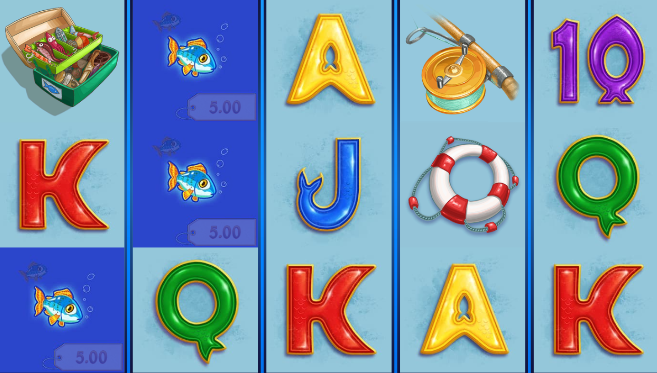
Behind its calm visuals and straightforward layout sits a tight and unforgiving mechanical structure, where almost all meaningful payout potential is locked inside a very narrow window of gameplay. When that window opens, the results can be dramatic. When it does not, the game feels empty — and that contrast is not accidental.
This page exists to explain why that contrast exists, and how big wins in Fishin’ Frenzy are formed — structurally, not emotionally.
What a Big Win Actually Means in Fishin Frenzy
What a Big Win Actually Means
Outcome Classification
A “big win” in Fishin’ Frenzy is defined by how it is produced — not by how it feels. The table below separates routine outcomes from structurally meaningful ones.
| Outcome Type | Where It Occurs | Structural Role | Impact |
|---|---|---|---|
| Routine Routine Outcomes | Base Game | RTP balance / rhythm |
Low |
| Perception Visually Strong Wins | Base / Bonus | Looks big, remains ordinary |
Moderate |
| Structural Structurally Significant Wins | Bonus | Multipliers begin to interact |
High |
| High-End High-End Outcomes | Escalated Bonus | Compounding structure |
Critical |
In this game, a big win is not defined by how it feels, but by how it is created.
In this game, a big win is not defined by how it feels, but by how it is created.
Most outcomes in Fishin’ Frenzy serve practical purposes:
- they keep the game moving,
- they stabilise RTP,
- they prevent long stretches of complete silence.
These results create rhythm — but not momentum.
A true big win only appears when the bonus feature transitions from activation to escalation.
Without that transition, even visually impressive wins remain mechanically ordinary.
Two critical points matter here:
- the base game does not build towards anything,
- progress does not carry over between spins.
Every meaningful outcome is self-contained. Nothing accumulates quietly in the background.
Understanding Win Behaviour in Practice
Win Impact Funnel
Most outcomes pass through the system without creating structural value. Only a narrow fraction reaches high-impact territory.
Routine Outcomes
These are the results players see most often.
They:
- appear frequently,
- maintain bankroll flow,
- provide reassurance that the game is “alive”.
From a mechanical perspective, they are neutral. They neither help nor hinder the appearance of a big win.
Structurally Significant Wins
At this stage, something changes.
- bonus mechanics begin to interact,
- wild elements stop behaving independently,
- the result reflects a specific configuration rather than chance alignment.
This is where the game stops being decorative and starts being mathematical.
Rare High-End Outcomes
These occur only when the bonus feature evolves, not merely runs.
They require:
- internal reinforcement,
- sustained interaction between multipliers,
- space for the structure to grow.
They cannot be forced, repeated, or chased.
The Single Engine Behind All Big Wins
Fishin’ Frenzy is not complex — but it is narrow.
There is one engine that matters.
The Bonus Feature as a Gateway

The bonus does not guarantee value. It grants access.
Inside it:
- wild symbols become persistent,
- multipliers gain relevance,
- the field gains memory.

Outside it, none of this exists.
A bonus that fails to develop internally is not “unlucky” — it is simply incomplete.
Sticky Wild Multipliers: The Real Core
Sticky wilds do not increase wins linearly.
They change the physics of the grid.
Once multiple sticky wild multipliers coexist:
- outcomes compound rather than add,
- each spin influences the next,
- the game shifts from random distribution to structural behaviour.
This is the moment Fishin Frenzy reveals its true design.
Retriggers as Structural Amplifiers
Amplifier Logic
Retriggers as Structural Amplifiers
Retriggers do not create value on their own. They extend the lifespan of a developing structure — preventing early collapse and enabling compounding to intensify.
Development States
Hover to preview. Click to pin a state.
Retriggers do not create wins by themselves.
What they do instead:
- extend the life of a developing structure,
- allow multiplier zones to stabilise,
- prevent early collapse of promising configurations.
Without this extension, most bonuses end before they become meaningful.
How Big Wins Typically Take Shape
Early Structural Anchoring
A key element settles early and remains active.
This:
- stabilises the bonus immediately,
- allows the grid to “work around” a fixed point,
- increases efficiency of every subsequent spin.
Multiplier Synchronisation
Here, timing matters more than position.
When multiple multiplier elements operate in unison:
- wins arrive in sequences,
- payouts feel rhythmic rather than explosive,
- the bonus sustains itself instead of peaking once.
Full Escalation Scenarios
These are rare and unmistakable.
Characteristics include:
- extended bonus lifecycles,
- large portions of the grid governed by wild zones,
- sustained compounding behaviour.
These scenarios define the reputation of Fishin’ Frenzy — but they are not representative of normal play.
Why Most Spins Do Not Matter
Why Most Spins Do Not Matter
Visual proof that the game does not “remember” — no accumulation, no hidden build-up.
This is the most misunderstood aspect of the game.
Most spins:
- have no impact on future outcomes,
- do not influence the bonus,
- do not alter probabilities downstream.
The base game:
- has no memory,
- does not “warm up”,
- does not respond to duration or frequency.
Beliefs in momentum, cycles, or approaching rewards have no structural foundation here.
Volatility Is Not Randomness
Volatility Is Not Randomness
Volatility comes from distribution: a broad layer of routine outcomes supports a narrow layer of bonus value.
Fishin’ Frenzy feels volatile because its value distribution is uneven by design.
- A wide layer of small results absorbs variance.
- A narrow layer of bonus outcomes holds disproportionate value.
- The transition between the two is abrupt.
This design creates sharp emotional contrasts, even though the mathematics remain consistent.
What Real Big Wins Have in Common
When analysed calmly, real big wins in Fishin’ Frenzy share clear traits:
- bonuses exceed their standard lifecycle,
- multipliers interact as a system, not as isolated boosts,
- value is produced cumulatively, not instantly.
They appear sudden only to those who do not see the structure forming underneath.
The Strategic Reality Players Resist
Strategic Reality
Does NOT affect structure
These levers feel powerful. In Fishin’ Frenzy, they do not change the underlying architecture.
False Controls
Tap an item to expand. Long-press to pin (desktop: click).
-
Bet size scales the unit value of outcomes, but it does not alter how the bonus forms or how multipliers interact.
-
Long sessions do not create momentum. Each bonus is self-contained; the base game does not warm up or carry state.
-
Changing speed only changes how quickly outcomes arrive. It does not change the model that produces them.
-
Taking breaks, changing mood, or “resetting luck” affects how play feels — not how the bonus structure emerges.
There is no strategy that alters the game’s architecture.
- stake size does not change structure,
- pacing does not unlock behaviour,
- persistence does not influence mechanics.
The only meaningful edge is clarity:
- understanding what the game can do,
- recognising when it cannot,
- abandoning the illusion of control.
Final Conclusion
Fishin Frenzy is often misunderstood not because it is complex, but because it is selective. The game does not distribute value evenly, and it does not attempt to disguise that fact. Instead, it concentrates almost everything that matters into a small number of highly specific situations and allows the rest of the gameplay to function as structural support.
What most players interpret as inconsistency is, in reality, discipline. The game refuses to blur the line between ordinary outcomes and meaningful ones. There is no gradual climb, no hidden accumulation, and no narrative of progress. Each bonus stands alone, judged entirely on its internal configuration, not on what came before or what follows.
This design choice explains both extremes of player experience. Long, uneventful sessions are not signs of failure, nor are large wins evidence of momentum. They are simply reflections of whether the necessary internal conditions aligned within a single bonus window. When they do not, nothing compensates for their absence. When they do, the result can appear abrupt and overwhelming.
Fishin’ Frenzy therefore rewards understanding, not optimism. It does not respond to emotional logic, and it does not negotiate with expectations. The game operates within clearly defined mechanical boundaries, and every outcome — small or large — exists somewhere within that framework.
Seen this way, big wins are no longer mysterious or mythical. They are rare by design, isolated by structure, and produced only when the system allows it. There is no lesson to extract, no pattern to replicate, and no behaviour to perfect. There is only alignment or non-alignment.
Once this perspective is adopted, the game becomes easier to read, even if it remains difficult to experience. Not because it becomes predictable, but because it becomes honest. And in a space where randomness is often mistaken for chaos, that honesty is the most important feature Fishin Frenzy has.