
Big Catch 3 Demo — Game Behaviour, Demo Limits & What It Actually Shows
What the Demo Version Represents
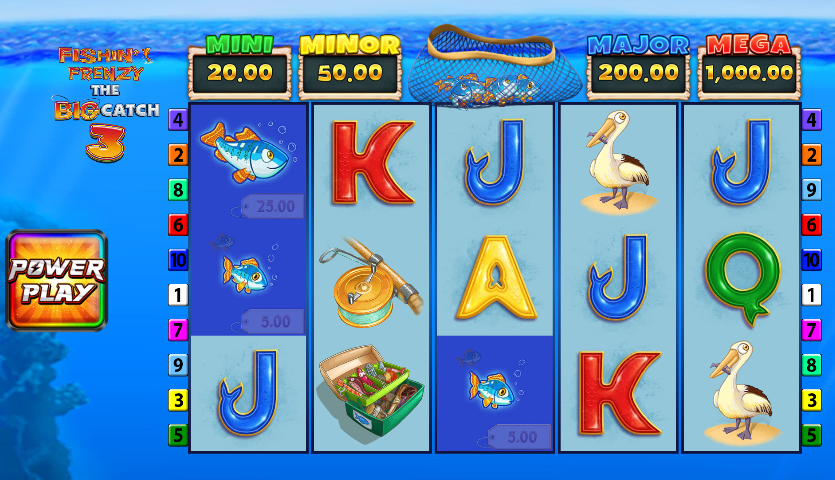
Fishin Frenzy Big Catch 3 Demo is usually approached as a harmless entry point. A way to spin the reels, explore the theme and get a general feel for the game without committing real money. This assumption is understandable, but it oversimplifies what the demo version actually represents.
In technical terms, the demo is a full implementation of the slot. The base game, cash fish symbols, collect mechanics and free spins are all present. Nothing is visually missing and nothing appears restricted. From a purely mechanical standpoint, the demo behaves exactly as the real-money version does.
The difference emerges not from the game itself, but from the conditions under which it is experienced.
By removing financial consequence, the demo strips away the single most influential factor in how slot sessions are perceived: pressure. Without the risk of loss, time stretches. Sequences that would feel uncomfortable or draining in real play become neutral or even forgettable. Small wins are interpreted as continuity rather than noise. Long dry spells are tolerated without resistance.
This changes how the entire session is read. In demo mode, the player observes the game. In real play, the player is involved in it.
That distinction matters especially in a slot like Big Catch 3, which is designed around extended sessions, delayed gratification and value concentration in specific phases. The demo makes this structure easier to endure, but also easier to misunderstand.
This page does not explain how to use the demo to “test luck”.
It explains what the demo can realistically show you about Fishin Frenzy Big Catch 3 — and where its insights inevitably stop.
Demo vs Real Play — Structural Differences. Not RTP Myths
| Aspect | Demo mode | Real play |
|---|---|---|
| Financial pressure | No direct consequence; losses are abstract. | Every spin carries cost and emotional weight. |
| Session length | Often longer and less deliberate. | Naturally limited by balance and decisions. |
| Perceived volatility | Feels smoother and more forgiving. | Felt through swings, gaps and uneven outcomes. |
| Bonus expectation | Grows with time spent in the game. | Balanced against cost and risk awareness. |
| Decision weight | Low — continuation feels effortless. | High — stopping and continuing both matter. |
One of the most persistent beliefs surrounding demo play is that it operates under different mathematical conditions. Lower volatility, altered RTP, improved bonus frequency. While these ideas are common, they are not the most relevant distinction when analysing Big Catch 3.
Structurally, demo and real play are aligned. The same game loop governs both. The same symbols appear with the same logic. The same bonus architecture defines where meaningful outcomes can occur. From the game’s side, nothing “switches” when moving from demo to real stakes.
What changes is the player’s frame of reference.
In demo mode, wins have no weight and losses have no consequence. This removes friction from the base game, making its repetitive nature feel smoother than it truly is. The steady appearance of low-impact events reads as stability rather than containment. The absence of tension masks how much of the session’s value is postponed into the bonus phase.
Time perception also shifts. Demo sessions often run longer than intended because there is no internal signal to stop. As exposure increases, expectation grows — not because the probability of a bonus has changed, but because the human mind associates duration with inevitability. This effect is particularly strong in slots that are designed to reward patience irregularly rather than frequently.
In real play, that same expectation carries cost. Each additional spin has meaning. Each continuation decision is weighted. The very same stretches that felt calm in demo mode may feel draining or risky when real balance is involved.
This is why demo play cannot accurately communicate volatility. It can show how the game is built, but it cannot replicate how the game behaves under pressure. Big Catch 3 relies heavily on that pressure to define its character.
The key takeaway is simple: demo mode reveals structure, not consequence. It shows the outline of the system, but not the emotional and financial dynamics that ultimately define the real experience.
Core Game Loop in Demo Mode
The core loop of Fishin Frenzy Big Catch 3 does not change in demo mode, but the way it is experienced does. The sequence remains familiar: base game activity, intermittent collection events, prolonged anticipation and, occasionally, a transition into free spins. What differs is how this loop is interpreted when nothing is at stake.
In demo play, the base game feels unusually accommodating. Cash fish appear regularly enough to keep the screen active, and small wins arrive often enough to prevent the session from feeling empty. Without financial consequence, these events are rarely questioned. They register as progress, even when they have little impact on the overall outcome.
This creates a softened rhythm. The loop appears balanced, almost forgiving. Extended periods without a bonus do not feel like a test of patience, but rather a natural part of the flow. In real play, the same stretches often define whether a session is perceived as successful or draining. In demo mode, they pass with little resistance.
Another important factor is repetition. Demo sessions tend to run longer and with less interruption. As the loop repeats, familiarity grows, and familiarity is often mistaken for control. The player begins to feel aligned with the rhythm of the game, even though the underlying process remains random.
The result is a loop that feels smoother than it actually is. Demo mode allows players to observe the structure of Big Catch 3’s Frenzy design, but it removes the friction that gives that structure its real meaning. What remains is a clean outline of the system, not its true weight.
Bonus Features in Demo — What You Can Learn and What You Can’t
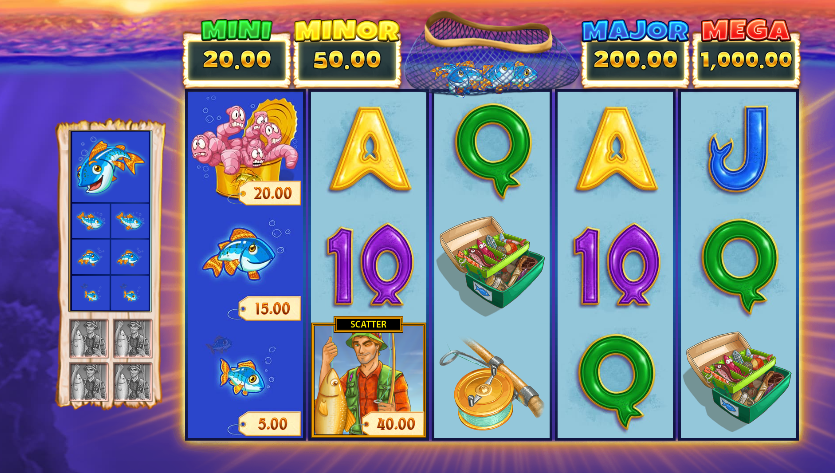
The free spins feature is the focal point of Big Catch 3, and demo mode inevitably draws attention to it. Because there is no cost associated with waiting, players are more willing to remain in the base game until a bonus appears. When it does, the experience often feels validating, regardless of the outcome.
In demo play, a single bonus can create a lasting impression. Even a modest free spins result may appear meaningful simply because it breaks the monotony of the base game. This can lead to overestimating the importance of individual bonus rounds and underestimating the variability between them.
What demo mode does offer is clarity of mechanics. It allows players to see how cash fish, collect symbols and multipliers interact during free spins. The visual language becomes familiar. The pace of the bonus round can be understood without pressure, which makes demo useful as a learning tool.
What demo mode cannot provide is context. It cannot show how inconsistent bonus outcomes shape real sessions over time. It cannot demonstrate how several weak bonuses in a row feel when balance is involved. It also cannot convey how rare truly high-impact outcomes are within the overall distribution.
In other words, demo play can explain how the bonus works, but not what the bonus is worth. That distinction is crucial in a slot where so much of the session’s value is concentrated into short, unpredictable windows.
Understanding this limitation is essential. Without it, demo play risks creating expectations that the real game has no obligation to meet.
Session Behaviour in Demo Play
Session behaviour in demo mode follows the same structural rules as real play, but the absence of risk fundamentally alters how those sessions unfold. Without balance management or loss awareness, demo sessions tend to be longer, looser and less deliberate.
Short demo sessions often feel inconclusive rather than incomplete. Because there is no pressure to extract value quickly, early exits do not carry the same weight they would in real play. This encourages continuation, even when nothing structurally meaningful is happening in the game.
Longer demo sessions reveal a different pattern. As time accumulates, the player becomes increasingly tolerant of low-impact sequences. Repetitive base-game cycles are accepted without frustration, and the idea of stopping feels arbitrary. This creates a psychological loop where duration itself begins to feel like progress.
This is where demo play subtly misleads. Extended exposure does not increase the likelihood of a bonus, yet it strongly increases the expectation of one. In real play, this growing expectation is counterbalanced by cost. In demo mode, it is not, allowing anticipation to build unchecked.
As a result, demo sessions often end not because the structure has resolved, but because attention shifts elsewhere. This makes it difficult to develop a realistic sense of pacing, particularly in a game like Big Catch 3 that relies on delayed outcomes to define its volatility profile.
Volatility Perception — Why Demo Feels “Softer”
Volatility is not experienced as a number. It is experienced as pressure, uncertainty and the emotional response to uneven outcomes. Demo mode reduces or removes all three.
Without financial consequence, downward swings lose their impact. Periods of low activity feel neutral instead of draining. Even when wins are small, they register as reassurance rather than containment. This reshapes the perceived volatility of the game.
In Big Catch 3, where the base game is intentionally calm and the bonus phase carries disproportionate weight, demo mode exaggerates the sense of smoothness. The game appears more consistent than it actually is, simply because its most challenging aspects require real stakes to be felt.
High-impact events also lose context. A strong bonus in demo mode feels impressive, but it is not framed by previous losses or missed opportunities. The emotional spike exists, but it floats free of consequence, making it difficult to judge its real significance within the game’s distribution.
This is why demo play often leaves players with the impression that Big Catch 3 is gentler than it truly is. The volatility is still there, embedded in the structure, but demo mode filters out the tension that allows that volatility to be recognised.
UX & Player Psychology in Demo Mode
Demo mode does more than remove financial risk. It subtly reshapes how the player interacts with the game on a cognitive level. In Fishin Frenzy Big Catch 3, this effect is especially pronounced because the game is designed to feel calm, steady and familiar for long stretches of time.
In demo play, patience increases almost automatically. Without the pressure of balance management, there is little reason to question extended base-game phases. The absence of negative reinforcement allows the player to remain engaged even when the session is objectively unproductive. This creates a sense of comfort that does not exist to the same degree in real play.
Expectation also behaves differently. As spins accumulate, the belief that a bonus is “due” grows faster in demo mode. This is not because the game signals anything, but because time spent becomes the dominant reference point. The longer the session runs, the stronger the internal narrative becomes, despite the underlying randomness remaining unchanged.
Another psychological shift occurs in how outcomes are evaluated. In demo play, wins are often judged in isolation. A bonus round is remembered as an event, not as part of a larger sequence. Losses, by contrast, fade quickly because they carry no lasting consequence. This selective memory reinforces a skewed perception of balance and reward.
For new players, this can be misleading. Demo mode encourages exploration but does not encourage restraint. It teaches familiarity with the interface, but not with the emotional dynamics of real sessions. In a slot like Big Catch 3, where endurance and variance are central to the experience, this gap is significant.
What the Demo Is Actually Good For
Despite its limitations, demo mode serves a clear and valuable purpose when used correctly. Its strength lies not in prediction, but in observation.
Demo play is effective for understanding how the game is built. It allows players to explore the base-game rhythm, recognise recurring visual cues and become comfortable with the mechanics of cash fish and collect symbols. The absence of pressure makes it easier to focus on structure rather than outcome.
The bonus feature is another area where demo mode is genuinely useful. Seeing free spins unfold without distraction helps clarify how values are accumulated, how pacing changes during the feature and how quickly outcomes can concentrate into short sequences. This knowledge transfers directly to real play, even if the emotional impact does not.
Demo mode is also well suited for testing user experience. Interface clarity, animation speed and overall responsiveness can be assessed across devices without risk. For players sensitive to visual noise or pacing, this alone can justify spending time in demo.
What demo does best is remove urgency. This makes it an effective learning environment, but a poor simulator of real conditions. When treated as a way to study the game’s architecture rather than its generosity, demo mode provides exactly the information it is capable of delivering.
The key is intention. Used to understand how Big Catch 3 functions, demo mode is reliable. Used to infer how it will feel or perform with real money, it inevitably falls short.
What the Demo Cannot Teach You
| Demo shows | Demo cannot show |
|---|---|
Mechanics How features trigger, how symbols behave, how the loop is built. | Commitment cost What it means to keep going when “one more” has consequences. |
Bonus visuals The look and pacing of free spins, transitions, UI feedback. | Emotional volatility How the same bonus feels when it arrives after real downswings. |
Session structure Long base stretches, repeat cycles, and where “impact” is designed to sit. | Session tension The pressure that accumulates when time spent equals money spent. |
Interaction patterns Stop/start behaviour, bet changes, and feature testing without risk. | Bankroll pressure Limits, discipline, and the trade-off between patience and depletion. |
There are clear limits to what demo mode can communicate, and understanding these limits is just as important as understanding the mechanics themselves. Fishin Frenzy Big Catch 3 is a game where much of the experience is defined not by what happens, but by how it feels when nothing happens for extended periods of time.
Demo mode cannot replicate financial tension. It does not teach bankroll awareness, because there is no reason to protect or preserve anything. Decisions to continue, stop or change stakes are absent entirely, removing one of the core skills required in real play.
It also cannot simulate downswings. Long sequences without meaningful returns are structurally identical in demo and real play, but emotionally they are worlds apart. In demo mode, these stretches are often ignored or forgotten. In real play, they define the session and strongly influence perception of the game.
Another missing element is consequence clustering. In real play, several weak bonuses in a row can have a cumulative effect that reshapes confidence and decision-making. Demo mode isolates each bonus as a standalone event, preventing the player from experiencing how variance compounds over time.
Finally, demo mode cannot teach restraint. Because there is no cost to continuation, there is no natural stopping point. This can be particularly misleading in Big Catch 3, where the design encourages endurance and delayed outcomes. Without learning when and why to stop, demo play remains an incomplete preparation.
In short, demo mode explains how the game functions, but not how it behaves under pressure. That behaviour only becomes visible when decisions carry weight.
Responsible Play Note — Understanding the Demo Boundary
Demo mode is often framed as a safe space, and in many ways it is. It removes financial risk, allows experimentation and lowers the emotional barrier to entry. However, this perceived safety can also blur important boundaries if it is misunderstood.
In Fishin Frenzy Big Catch 3, demo play can normalise long sessions and prolonged exposure without consequence. Because nothing is lost, there is no natural feedback loop that signals fatigue, frustration or diminishing returns. This makes demo play feel endlessly sustainable, even though real play is not.
The transition from demo to real play is where problems usually arise. Expectations formed without pressure can carry over into situations where pressure suddenly exists. What felt calm in demo mode may feel draining with real stakes. What felt “almost there” may turn into a source of unnecessary persistence.
Responsible use of demo mode means recognising its limits. It is a learning environment, not a rehearsal for outcomes. Treating demo sessions as informational rather than indicative helps prevent false confidence and misplaced expectations.
Understanding where demo mode ends — and where real decision-making begins — is a crucial part of maintaining control when stakes are introduced.
How to Use the Demo Correctly
Fishin Frenzy Big Catch 3 Demo is often treated as a preview of potential outcomes. Spins are taken, a bonus is triggered, and conclusions are drawn. This approach is understandable, but it places the demo in a role it was never designed to fill.
The demo does not predict performance. It does not approximate long-term results, and it does not prepare players for the emotional structure of real sessions. What it offers instead is something quieter, and arguably more useful: transparency.
Through demo play, the architecture of Big Catch 3 becomes visible. The pacing of the base game, the way activity is maintained through small events, and the concentration of impact into short bonus phases can all be observed without interference. This makes the demo an effective tool for understanding how the game is meant to function over time.
Where demo mode becomes misleading is when observation turns into expectation. Without risk, time feels different. Endurance feels effortless. Anticipation grows unchecked. These conditions are not neutral; they actively reshape perception. When real stakes are introduced, the same structure can suddenly feel heavier, slower and far less forgiving.
This is particularly relevant in a slot like Big Catch 3, which relies on delayed resolution as a core design principle. The demo makes that delay easy to tolerate, but it does not communicate its cost. As a result, players who rely on demo impressions may underestimate how uneven real sessions can feel.
Used correctly, demo mode should be approached as a reference, not a rehearsal. It is most valuable when it helps answer structural questions: How active is the base game? Where does meaningful value actually come from? How does the bonus unfold once it arrives? These are insights that transfer cleanly into real play.
Used incorrectly, demo mode becomes a source of false confidence. Individual demo outcomes are remembered, while the absence of consequence is forgotten. The gap between what was expected and what is experienced widens, not because the game has changed, but because the context has.
The most balanced way to interpret Fishin Frenzy Big Catch 3 Demo is to see it as a map of the system rather than a promise of results. It outlines the terrain, highlights the points of interest and shows where the game places its emphasis. It does not, and cannot, simulate the journey itself.
Understanding this distinction allows the demo to fulfil its intended role. Not as an assurance, but as a lens. Not as evidence, but as explanation. And when used in that way, it becomes a genuinely useful part of evaluating whether Big Catch 3 is a game worth engaging with under real conditions.
| What demo suggests | What it really represents |
|---|---|
“The game is calm.” Low friction, steady feedback, little emotional cost. | Calm visuals ≠ calm outcomes. The loop can still produce uneven sessions when stakes are real. |
“Time spent means progress.” Longer play feels like the bonus should arrive soon. | Exposure increases, probability does not. Time fuels expectation; triggers remain random. |
“Base game wins define the run.” Frequent small hits create the impression of stability. | Base wins mostly maintain rhythm. Session outcomes are typically decided by feature windows, not base noise. |
“Volatility feels low.” No bankroll pressure → downswings don’t register. | Volatility becomes visible with consequence. Risk changes memory: gaps and swings feel sharper in real play. |
“The demo predicts my results.” A good or bad run can feel “representative”. | Demo teaches structure, not outcomes. Use it to learn pacing and features — not to forecast profitability. |