
Big Catch 3 Slot – Game Logic, Volatility Model & Bonus Architecture
What Big Catch 3 Represents in the Frenzy Series
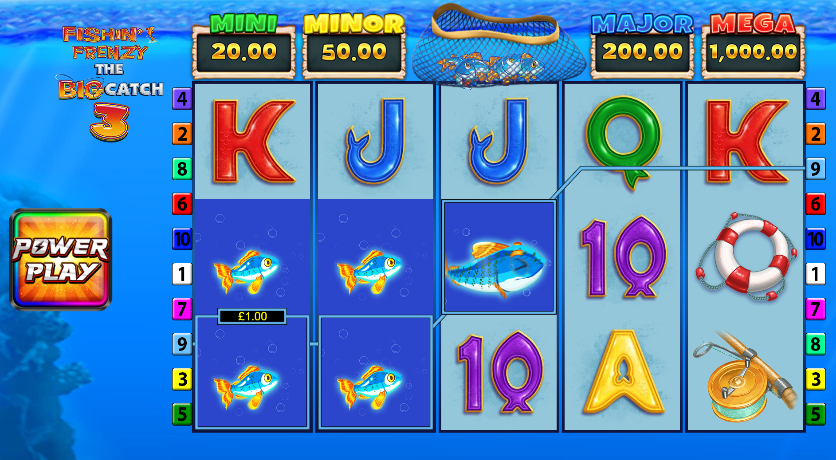
Fishin Frenzy Big Catch 3 looks familiar at first glance. The fishing theme, the established format of the series and the calm visual presentation all create the impression of a predictable slot that does not require much interpretation. Because of this, it is often approached casually and judged very quickly.
That first impression is misleading.
Big Catch 3 is a structured Frenzy slot built around a session-based model, where most of the value is not created by individual spins, but by how the session develops over time. The game does not attempt to impress with complex mechanics or dramatic volatility swings. Instead, it relies on rhythm, repetition and a steady flow of small events that gradually lead towards a bonus phase.
This is not a slot designed to surprise.
It is a slot designed to feel stable.
The problem is that this stability is often mistaken for low risk. In reality, the game distributes its value unevenly, concentrating meaningful outcomes into a limited number of moments. Most sessions remain flat, even if they appear active on the surface.
This page is not about how to “catch the big one”.
It explains how Fishin Frenzy Big Catch 3 actually behaves over distance, why many sessions feel similar regardless of duration, and why the perceived consistency of the game rarely translates into meaningful results.
As part of the Fishin Frenzy series, Big Catch 3 retains all the familiar elements: a simple base game, cash fish symbols, random collection events and free spins. What has changed is the emphasis. This version leans more heavily on time spent in the game rather than immediate feedback.
It does not pressure the player.
It does not punish quickly.
It does not demand aggressive betting.
That is precisely why players often stay longer than intended. Big Catch 3 requires no strategic adjustment and no active decision-making. It operates through repetition and habit, which is central to understanding how the slot functions.
Core Game Loop — Why the Game Feels Calm but Rarely Shifts the Outcome
The core loop of Fishin Frenzy Big Catch 3 is deliberately simple. So simple, in fact, that its true purpose is easy to miss. The base game is designed to maintain a constant sense of activity, even when the financial outcome of the session barely changes.
At the centre of this loop are the cash fish symbols. They appear frequently and serve an important psychological role: they create the impression that the game is consistently giving something back. In practice, most of these values are small and have little impact on the overall result. Their function is not to improve the session, but to sustain momentum.
Collect symbols and random collection events introduce moments of variation, but they do not alter the underlying structure of the game. They do not represent linear progress and they do not move the player closer to a bonus in any predictable way. Instead, they break monotony without changing direction.
The base game in Big Catch 3 is not designed to define the outcome. It acts as a time-accumulation phase. The longer a session continues, the stronger the expectation becomes that a bonus should occur, even though this expectation is not mathematically guaranteed. A significant part of player engagement is built on this tension.
The bonus phase remains the only point at which the session can meaningfully change. Everything before it functions as preparation. This is why players often judge a session not by total returns, but by a simple question: did the bonus trigger or not.
This loop repeats continuously, creating a familiar and almost soothing rhythm. Big Catch 3 does not attempt to shock or disrupt the experience. Its objective is different — to keep the player engaged without signalling risk, while never promising a result.
Cash Fish Mechanics — Where the Value Actually Sits
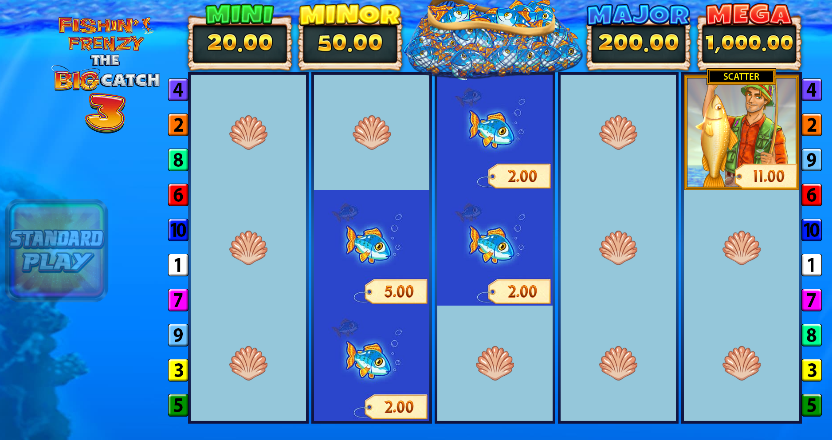
Cash fish symbols are the most recognisable element of the Fishin Frenzy series, and in Big Catch 3 they play a very specific role. On the surface, they appear to be the main source of value during the base game. In reality, they function more as structural support than as a reliable way to influence the outcome of a session.
Cash fish appear frequently enough to create continuity. Their presence reassures the player that something is happening, that the game is active and responsive. However, the majority of these values are deliberately modest. They rarely alter the balance of a session in any meaningful way on their own.
This is not accidental.
In Big Catch 3, cash fish are designed to normalise low-impact returns. They smooth the experience, reduce frustration during dry stretches and prevent the base game from feeling empty. At the same time, they do not create momentum. A sequence of small cash fish wins does not meaningfully increase the likelihood of a stronger outcome later in the session.
The Fisherman collect symbol reinforces this logic. When it appears, it gathers visible value and delivers a moment of resolution. Psychologically, this feels important. Structurally, it is mostly neutral. In the majority of cases, the collect event simply consolidates small values rather than transforming the session.
What is crucial to understand is that cash fish are not a progression system. They do not represent advancement towards a goal, nor do they indicate that a bonus is becoming more likely. Their function is to stabilise the rhythm of play and maintain engagement without increasing exposure.
Because of this, players often overestimate the importance of base-game cash fish. A session may feel productive due to frequent collections, while the actual financial trajectory remains flat. This disconnect between perception and outcome is one of the defining characteristics of Big Catch 3.
The real value of cash fish only becomes apparent in the bonus phase. Outside of it, they exist primarily to support the loop rather than to define the result.
Free Spins — The Big Catch Phase Explained
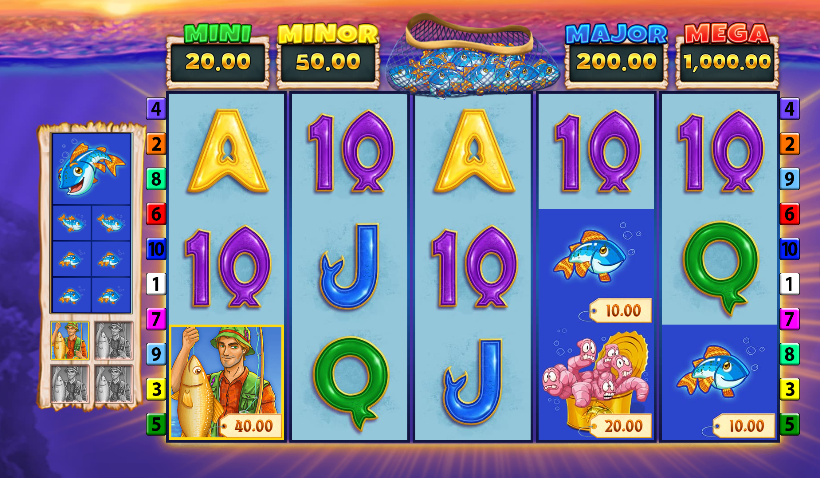
The free spins feature represents the only phase in Fishin Frenzy Big Catch 3 where the structure of the game genuinely changes. Everything leading up to it functions as preparation. Everything after it is effectively a reset.
Free spins are where cash fish begin to matter. The same symbols that felt inconsequential in the base game can suddenly carry enough weight to reshape the session. This contrast is deliberate. It reinforces the idea that patience, rather than activity, is what the game ultimately rewards.
Importantly, not all free spin bonuses are equal. Some produce little more than a confirmation that the feature was triggered. Others can dominate the entire session. This imbalance is central to the volatility profile of the game. The bonus does not guarantee improvement; it merely creates the possibility of it.
During free spins, the interaction between cash fish and collect mechanics becomes denser and more impactful. Events feel more connected. Outcomes feel less fragmented. For the first time in the session, multiple elements align toward a single result.
This is why players often define their experience of Big Catch 3 by the bonus alone. A long session without free spins feels unfinished, regardless of how many small wins occurred along the way. Conversely, a modest session can feel successful if the bonus delivers a concentrated return.
From a design perspective, this makes the free spins phase a value compression point. A large portion of the game’s potential is condensed into a short sequence, while the base game stretches time and expectation.
Understanding this separation is essential. Big Catch 3 is not built around gradual accumulation. It is built around contrast: long periods of stability followed by a brief window where the outcome can meaningfully change.
That window does not open often. When it does, it does not promise anything. It simply allows the game to finally reveal whether the session was worth the wait.
Session Phases — How a Typical Big Catch 3 Session Unfolds
| Phase | What happens | What it means |
|---|---|---|
| Entry | Calm start. Small events arrive early. The rhythm establishes quickly. | Early “safety” lowers friction and makes continuation feel natural. |
| Collection | Regular low-impact hits and cash-fish moments keep the screen active. | High activity can still produce a flat session result. |
| Anticipation | Time in-game increases the feeling a bonus should appear soon. | Expectation grows psychologically, not mathematically. |
| Big Catch | Free spins window. Outcomes can concentrate into a short sequence. | The session may shift here, but nothing is guaranteed. |
| Reset | Back to base. Momentum fades and the loop starts again. | Feels like a “clean slate”, which often triggers “one more run”. |
A typical session in Fishin Frenzy Big Catch 3 rarely feels dramatic. Instead, it follows a recognisable sequence of phases that repeat with minor variations. Understanding these phases is more useful than analysing individual spins, because the game is designed to be read over time rather than moment to moment.
The session usually begins with an entry phase. This stage is calm and neutral. Cash fish appear early, small collections occur, and the game establishes its rhythm. There is little pressure and no strong signals in either direction. This phase exists to lower resistance and set expectations.
It then moves into a collection phase, where small wins and frequent cash fish create a sense of continuity. Nothing significant happens, but nothing feels completely empty either. For many players, this phase makes up the majority of their time in the game. The slot feels active, familiar and predictable.
As the session continues, an anticipation phase develops. This is not triggered by any clear mechanic, but by time spent in the game. The longer the session runs, the stronger the internal expectation becomes that a bonus should occur. Importantly, this expectation is psychological rather than mathematical.
If the bonus triggers, the session briefly enters the Big Catch phase. This is the only moment where the structure shifts and outcomes can concentrate. The result of this phase often defines how the entire session is remembered, regardless of what happened before.
After the bonus, the game returns to a cool-down or reset phase. Momentum is lost, cash fish return to low-impact values, and the loop begins again. Any sense of progress is effectively erased.
What stands out in this structure is the lack of gradual escalation. There is no steady build towards a climax. Instead, Big Catch 3 operates on repetition, punctuated by rare interruptions. Most sessions never leave the collection phase. Those that do often resolve quickly.
This phase-based design explains why players frequently feel that time passes quickly in the game, even when results remain modest. The experience is smooth, but the outcomes are compressed into very few moments.
Volatility and RTP Distribution — Why the Game Feels Safer Than It Is
| Area | Role | Impact | Why it feels misleading |
|---|---|---|---|
Base Game | Maintains rhythm and keeps the session feeling active. | Low direct contribution | Frequent small hits look like progress, even when the net result stays flat. |
Free Spins | The main delivery window where outcomes can concentrate. | High impact, short window | Infrequent triggers skew perception: the bonus can “define” the whole session. |
Whole Session | Blends calm pacing with rare spikes and quiet endings. | Depends on bonus timing | Smooth flow can hide how uneven the value distribution really is. |
Fishin Frenzy Big Catch 3 is often perceived as a relatively safe slot. This perception comes from its calm presentation, frequent small events and lack of aggressive swings during the base game. However, this surface-level stability masks a more uneven distribution of value.
The game’s volatility does not express itself through sharp losses or sudden spikes in the base game. Instead, it appears through concentration. A large portion of the RTP is tied to the free spins feature, while the base game delivers controlled, low-impact returns.
This creates a disconnect between experience and expectation. Because the game rarely feels punishing, players may underestimate how dependent their session is on a single event. Without a productive bonus, even a long session with many small wins can remain close to break-even or negative.
From a mathematical perspective, this means that time does not guarantee improvement. Extended play increases exposure but does not meaningfully increase certainty. The bonus remains random, and its value remains uneven.
The result is a slot that feels forgiving but behaves selectively. When a strong bonus occurs, it can offset a long period of low returns. When it does not, the session ends quietly, often without a clear moment of loss.
This volatility profile is subtle but demanding. It rewards patience without promising compensation. It allows engagement without signalling risk. And it encourages longer sessions while concentrating outcomes into a narrow window.
Understanding this balance is essential. Big Catch 3 is not designed to drain quickly, but it is also not designed to build steadily. It exists in the space between comfort and uncertainty, where most decisions feel harmless and most outcomes are deferred.
UX and Player Psychology — Why the Loop Is Hard to Leave
Fishin Frenzy Big Catch 3 is not designed to overwhelm the player. Its interface is calm, its pace is measured, and its feedback is frequent but restrained. This creates an experience that feels controlled, even when the outcome is uncertain.
The most important psychological mechanism in the game is normalisation. Small wins occur often enough to prevent frustration, but rarely enough to avoid building momentum. Over time, this conditions the player to accept low-impact returns as the default state of play.
Cash fish play a central role in this process. Their regular appearance reassures the player that value is being generated, even when the overall balance does not change meaningfully. Because these events are visible and familiar, they carry more psychological weight than their numerical value suggests.
Another key factor is the absence of clear failure signals. Big Catch 3 rarely produces moments that feel like losses. Stakes decline gradually, sessions end quietly, and there is no sharp contrast that forces reflection. This makes it easy to continue playing without reassessing the session.
The bonus anticipation effect reinforces this behaviour. As time passes, the expectation of a free spins trigger grows, regardless of probability. This expectation is not driven by mechanics, but by repetition. The longer the game runs, the harder it becomes to step away before “something happens”.
Importantly, the game does not punish impatience, but it does not reward it either. Leaving early feels premature. Staying longer feels reasonable. This balance keeps the player engaged without creating obvious pressure.
From a UX perspective, Big Catch 3 is designed to be emotionally smooth. It avoids extremes, delays conclusions, and shifts responsibility away from individual decisions. The result is a loop that feels easy to stay in, even when there is little objective reason to continue.
Fishin Frenzy Big Catch 3 vs Other Frenzy Versions
Within the Fishin Frenzy series, Big Catch 3 occupies a specific position. It is neither the simplest entry nor the most volatile. Instead, it refines the core formula by placing greater emphasis on session structure rather than immediate feedback.
Compared to the original Fishin Frenzy, Big Catch 3 feels more controlled. The base game is less about occasional spikes and more about consistency. Small events occur more regularly, but larger shifts are pushed deeper into the bonus phase.
When compared to earlier Big Catch versions, this iteration is more restrained. It relies less on sudden changes and more on sustained engagement. The bonus remains important, but the path towards it is smoother and less emotionally charged.
What has not changed is the fundamental Frenzy identity. Cash fish still define value. The bonus still defines the session. And the base game still exists primarily as a bridge between those two states.
Big Catch 3 is best understood as a refinement rather than a reinvention. It does not attempt to add complexity or increase risk dramatically. Instead, it adjusts pacing, reduces friction, and strengthens the loop that keeps players engaged.
For players familiar with the series, this version will feel comfortable but slower to resolve. For new players, it may appear approachable while quietly demanding patience. In both cases, the game rewards familiarity with its rhythm rather than experimentation.
Player Profile — Who This Slot Is and Is Not For
Fishin Frenzy Big Catch 3 is not a universal slot, even though it often appears that way. Its calm surface and familiar mechanics suggest accessibility, but the underlying structure favours a specific type of player.
This slot suits players who are comfortable with long, even sessions where progress is measured in time rather than outcomes. Those who enjoy a steady rhythm, frequent low-impact events and a predictable flow will find the experience familiar and manageable. The game does not demand active decision-making or constant reassessment.
Players who value the bonus phase as the defining moment of a session will also recognise the logic here. Big Catch 3 places clear emphasis on free spins as the primary value driver. If a player is willing to accept that most of the session exists to support a single event, the structure makes sense.
However, the slot is less suitable for players seeking immediate feedback or visible progression. There is no sense of building towards a guaranteed outcome, and no mechanic that rewards persistence in a linear way. Staying longer increases exposure, not certainty.
It is also not ideal for players who rely on volatility to define excitement. Big Catch 3 avoids sharp contrasts. Wins and losses are softened, which can make the experience feel uneventful if the bonus does not deliver.
In short, this is a slot for players who are comfortable with process over payoff, and who understand that most sessions will resolve quietly. Those expecting momentum, escalation or frequent turning points are likely to feel disengaged.
FAQ — Fishin Frenzy Big Catch 3
| The game sits in a medium to medium–high volatility range. While the base game feels stable, a significant portion of value is concentrated in the free spins feature, which creates uneven outcomes over time. |
| Yes, but base-game wins are generally small and rarely define the session. Their primary role is to maintain rhythm rather than generate meaningful profit. |
| Cash fish are central to the game’s structure, but their importance is often overstated. In the base game, they primarily support engagement. Their real impact is felt during free spins. |
| Longer sessions increase exposure, not probability. The expectation of a bonus grows psychologically with time, but the trigger itself remains random. |
| Mechanically, yes. Strategically, it requires patience. Beginners may find the pace comfortable, but should understand that results are not immediate. |
Responsible Play — Understanding the Frenzy Model
Fishin Frenzy Big Catch 3 does not present itself as a risky game. Its calm pace, frequent small events and lack of sharp losses create an experience that feels controlled and manageable. This perception is important to address, because it can be misleading.
The game is built around extended engagement, not rapid resolution. Most sessions do not end with a clear win or loss, but with a gradual conclusion that feels neutral. This makes it easy to underestimate exposure, especially during longer sessions where time passes without noticeable tension.
A key point to understand is that progress in Big Catch 3 is not cumulative. Cash fish, collections and time spent in the game do not move the player closer to a guaranteed outcome. Each spin remains independent, regardless of how long the session has lasted.
Because the bonus phase carries most of the game’s potential, it can easily become the focal point of expectation. When this happens, the base game risks being treated as an obligation rather than a choice. Recognising this dynamic is essential for maintaining control.
Playing Big Catch 3 responsibly means setting clear limits before the session begins and accepting that many sessions will resolve without a defining moment. The game rewards patience only occasionally, and never on demand.
Understanding the structure of the slot does not change its randomness, but it does reduce the likelihood of playing under false assumptions.
What Fishin Frenzy Big Catch 3 Really Is
Fishin Frenzy Big Catch 3 is often misunderstood because it does not behave like a typical slot. It does not escalate. It does not build pressure. And it does not clearly reward persistence. Instead, it presents a calm, repetitive structure that quietly shifts responsibility away from individual outcomes and onto the overall session.
At its core, Big Catch 3 is a time-based Frenzy system. The base game is not designed to resolve anything. It exists to extend the session, normalise low-impact events and maintain engagement without creating urgency. Most of the experience takes place in this state, where activity is constant but progress is undefined.
The bonus phase is not a continuation of that process, but a contrast to it. Free spins represent a short window where the game temporarily allows outcomes to concentrate. When this window opens, it can redefine the entire session. When it does not, the session fades out quietly, often without a clear sense of conclusion.
This imbalance is deliberate. Big Catch 3 is not trying to distribute value evenly. It is built around selective resolution, where meaning is created only at specific moments. Everything else exists to support the possibility of those moments occurring.
Because of this design, the game feels safer than it is. It avoids sharp losses and dramatic swings, which makes it easy to underestimate how dependent the session is on a single event. Time spent in the game feels justified, even when it produces little tangible result.
Understanding Fishin Frenzy Big Catch 3 means accepting that most sessions are structurally incomplete. They do not build toward a climax. They do not deliver closure. They simply end when the player stops. The bonus, when it occurs, does not complete the game — it merely interrupts the loop.
For players who recognise this, Big Catch 3 can be engaging in a restrained, almost procedural way. It rewards familiarity with its rhythm rather than anticipation of outcomes. For others, it will feel flat, repetitive or unrewarding, not because it is broken, but because it is functioning exactly as designed.
Fishin Frenzy Big Catch 3 is not about catching something big.
It is about remaining in a system that occasionally allows something to happen, while offering no guarantee that it will.
That is not a promise.
It is the structure.
| Signal you notice | What it actually is | What it implies |
|---|---|---|
Stable base wins Small hits keep appearing | Rhythm maintenance, not value delivery. | Session can feel “alive” while still being outcome-flat. |
Cash fish everywhere Looks like momentum | Engagement driver in base; leverage mostly appears in free spins. | Don’t overread it as “the run is hot”. |
“It must bonus soon” Time spent increases expectation | Psychological build-up, not a probability build-up. | Long sessions increase exposure only, not your odds. |
Bonus finally lands Short high-impact window | The only phase that can materially redefine the session. | Outcome concentration: one feature can “decide” everything. |
Back to calm after The loop resets | Design reset that removes the feeling of progress. | Triggers “one more cycle” behavior if you’re not careful. |