
Promo Code Fishin Frenzy: Structural Analysis of Bonuses, Wagering and Real Value
Promo Codes Modify Exposure, Not Mathematics
How a promo code reshapes the session
This flow shows the layered dependency: the code changes exposure and pacing, not the slot’s RTP engine.
The promo layer does not edit the return model; it only changes how long you stay inside it.
Different bonus formats reshape the same volatility into either a compressed window or an extended horizon.
More exposure can raise feature encounter likelihood, but it also increases total turnover under fixed expectation.
When discussing a Fishin’ Frenzy promo code, clarity must begin with a simple distinction: a promotional mechanism alters session conditions, not game mathematics. The internal probability model of Fishin’ Frenzy is fixed. Each spin operates independently. The chance of landing fish symbols with attached values, the probability of the Fisherman wild appearing, and the likelihood of triggering Free Spins remain unchanged whether a session is funded entirely by cash or partially through a promotional code.
Return to player is embedded within the game configuration selected by the operator. Volatility classification is determined by distribution weightings and feature frequency. A promo code cannot penetrate this structural layer. It does not adjust symbol weighting. It does not increase feature frequency. It does not influence payout scaling beyond what is already defined in the paytable.
What it modifies is exposure.
Exposure refers to the number of spins a player experiences before bankroll depletion or session termination. A matched deposit bonus increases the apparent balance. Free spins add finite, pre-defined trials. Hybrid promotions extend both compressed and extended exposure within the same session. These adjustments reshape the temporal structure of play.
Consider two players engaging with identical stake sizes. One plays with a £20 deposit and no promotion. The other activates a 100 per cent matched bonus with a 30x wagering requirement on the bonus portion. The second player appears to have more funds. However, the promotional structure obliges extended volume before withdrawal is possible. The player is not granted mathematical advantage; they are granted additional interaction with the RTP model.
In short sessions, variance dominates perception. Outcomes appear abrupt. Wins feel dramatic or absent. In longer sessions, outcomes seem more evenly distributed. This smoothing effect is psychological rather than structural. Over extended volume, realised returns tend to approach theoretical expectation. Promotions lengthen the path towards that convergence.
A Fishin’ Frenzy promo code therefore functions as an exposure modifier. It reorganises session length and pacing. It does not alter probability per spin. Recognising this boundary prevents the most common misunderstanding: the belief that promotional activation equates to improved odds.
The game remains the same. The timeframe changes.
The Fixed Architecture of RTP and Volatility
Fishin’ Frenzy is built upon a collector-based volatility model. Fish symbols carry cash values. The Fisherman wild collects those values when appearing on the reels. Three scatter symbols activate Free Spins. These mechanics form a closed structural system.
Return to player represents the theoretical percentage of total stakes returned to players over extensive play. It is calculated across millions of simulated spins. It is not a short-session guarantee, nor is it responsive to promotional overlays. When a casino offers a promo code, the RTP configuration of the slot does not recalibrate.
Volatility, similarly, remains fixed. Fishin’ Frenzy is generally categorised within a medium-to-high volatility band, depending on configuration. This classification reflects payout distribution: frequent smaller wins interspersed with occasional concentrated feature payouts. The collector mechanic intensifies this dynamic because value accumulation depends on conditional symbol alignment.
Promotions do not alter volatility classification. A session funded by free spins still experiences identical distribution behaviour. What changes is perception. A no-deposit offer might include twenty spins. Within such a limited frame, volatility feels amplified because the sample is narrow. A matched deposit bonus may extend play across hundreds of spins, creating the impression of smoother rhythm. Yet the per-spin distribution remains intact.
Understanding fixed architecture is essential when evaluating promotional claims. If a code advertises “better chances” or “boosted potential”, the language should be interpreted cautiously. Unless the underlying RTP configuration has been altered — and such changes are typically disclosed separately — the mathematical structure persists.
In practical terms, a player activating a Fishin’ Frenzy promo code enters the same probability environment as any other participant. The reels do not recognise the source of funds. The Fisherman wild does not distinguish between bonus and cash balance. Scatter frequency remains statistically consistent.
This constancy defines the limits of promotional influence.
Promotions can increase duration. They can mandate wagering. They can concentrate or extend exposure. They cannot recalibrate the engine.
Three Promotional Models in Fishin Frenzy
Promotional Structure Comparison
A structural view of how different promotional formats reshape exposure, wagering pressure and variance perception within the same fixed RTP framework.
| Model | Exposure Type | Wagering Impact | Variance Behaviour |
|---|---|---|---|
| No-Deposit Spins | Compressed | Usually Low / Medium | Intensified |
| Deposit Match | Extended | High | Smoothed Perception |
| Hybrid | Layered | High | Mixed Compression & Extension |
Promotional structures associated with Fishin’ Frenzy generally fall into three primary models: no-deposit free spins, deposit match bonuses, and hybrid offers combining matched funds with additional spins.
No-deposit free spins create a contained volatility chamber. The player receives a fixed number of spins without depositing funds. Because the window is finite, outcomes appear compressed. A feature trigger within that window feels disproportionately impactful. Absence of a feature produces abrupt closure. Structurally, this model offers risk-free exposure, yet the limited sample size ensures high variance perception.
Deposit match bonuses expand apparent bankroll. A player depositing £25 may receive an additional £25 in bonus funds. However, these funds are rarely withdrawable without conditions. Wagering multipliers apply, often 30x or higher on the bonus portion. This requirement compels extended volume before any profit becomes accessible. The session horizon lengthens substantially. The promotional layer transforms into a volume mandate rather than an immediate advantage.
Hybrid offers combine both elements. They provide matched funds and a set of free spins, sometimes attached specifically to Fishin’ Frenzy. This dual structure introduces two volatility phases within one promotional framework. The free spins segment operates as a compressed feature-focused interval. The matched funds segment extends play into a longer convergence phase influenced by wagering.
Each model influences exposure differently.
No-deposit spins concentrate variance. Deposit matches extend variance across time. Hybrids layer compression and extension sequentially. None of these structures modifies per-spin probability. All of them reorganise how long and under what constraints the player interacts with the game.
Evaluating a Fishin’ Frenzy promo code therefore requires examining its structural model rather than its headline value. The quantity of spins or size of the match is secondary to the conditions governing exposure and withdrawal.
Free Spins as a Controlled Volatility Chamber
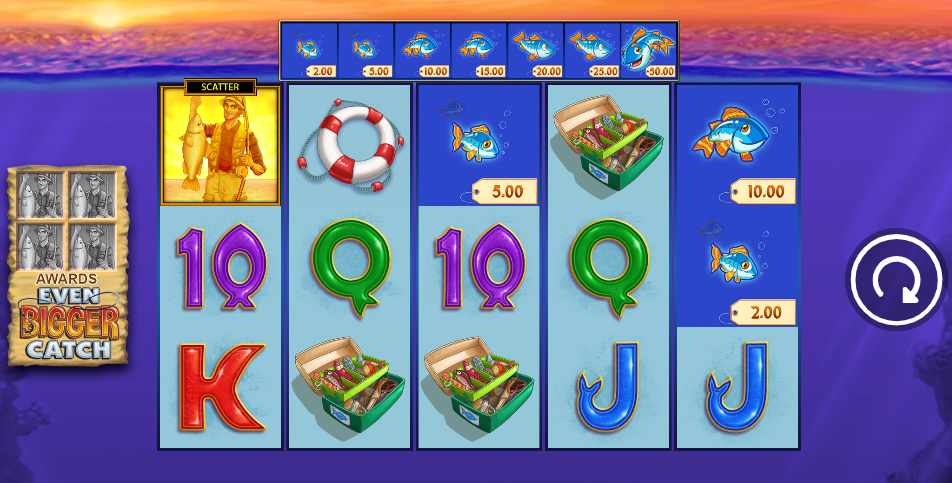
Within Fishin’ Frenzy, Free Spins are not a cosmetic extension of the base game. They function as a modified volatility environment layered on top of the core collector mechanic. When a promo code grants free spins, it does not create new mathematics; it grants direct entry into this intensified phase without requiring prior base-game triggering.
The defining feature of the Free Spins round is structural concentration. Fish symbols carrying cash values tend to appear with greater density. The Fisherman wild becomes the central driver of outcome acceleration. When alignment occurs, multiple values can be collected in a single event. This produces payout clustering rather than evenly distributed returns.
In a standard session, reaching Free Spins requires landing three scatter symbols. The journey towards that trigger creates anticipation. When a promo code bypasses this requirement and allocates spins directly, the player enters the volatility chamber immediately. This shift in entry point alters pacing.
The compressed structure of promotional free spins creates a specific psychological and mathematical dynamic. Because the number of spins is predetermined, the variance field narrows. A sequence of twenty free spins represents a finite volatility corridor. Within that corridor, either a collector sequence materialises or it does not. There is no gradual drift towards expectation across hundreds of spins; there is only a short, concentrated window.
This concentration intensifies perception. A successful collector event feels decisive. An absence of alignment feels abrupt. The volatility itself remains unchanged per spin, yet the narrow exposure frame amplifies its emotional impact.
It is important to distinguish between increased density and increased probability. The Free Spins round may appear more active due to symbol behaviour and thematic acceleration. However, its payout contribution is already integrated into the slot’s overall RTP model. When free spins are granted via promo code, they do not add additional theoretical return beyond what the game already allocates to its feature.
They simply isolate and deliver the most dynamic phase in a confined structure.
This is why promotional free spins can feel generous. They remove the base-game grind and transport the player directly into the segment where payout variance is most visible. Yet they remain governed by the same distribution logic. A controlled volatility chamber is still a volatility chamber.
Deposit Matches and the Illusion of Extended Safety
Deposit match bonuses operate differently. Rather than concentrating variance, they extend the session horizon. The balance appears larger. The duration of play increases. The experience feels buffered.
This perception of safety is structural, not mathematical.
When a player deposits funds and receives an equivalent bonus, the total playable balance doubles. However, withdrawal is typically restricted until wagering requirements are satisfied. If the bonus carries a 30x multiplier, the bonus portion must be cycled thirty times before eligibility. In many cases, the wagering applies to both deposit and bonus combined.
This mechanism transforms the promotion into a volume obligation. Instead of a short, concentrated volatility window, the player enters a prolonged convergence process. The more spins played, the more realised outcomes tend to gravitate towards theoretical RTP. The extended horizon smooths perception, not expectation.
A longer session often feels less extreme. Losses are distributed across time. Wins appear intermittently. The collector mechanic has multiple opportunities to activate. The rhythm of Fishin’ Frenzy becomes visible. Yet the underlying variance classification does not soften. High-value fish collections remain conditional. Free Spins remain statistically independent events.
The illusion of safety arises because the balance depletes more slowly. The player experiences more spins before exhaustion. However, exposure to house edge increases proportionally with volume. A longer session increases the probability of encountering features, but it also increases total stake cycled through the RTP model.
Deposit matches therefore trade intensity for duration. They reduce abrupt termination while increasing cumulative exposure. This structural trade-off is often overlooked in promotional messaging. The larger balance figure attracts attention; the wagering multiplier governs reality.
From a structural standpoint, deposit matches are not generosity devices. They are exposure extenders combined with withdrawal conditions. They smooth perception while binding the session to prolonged volume.
Hybrid Promotions and Layered Exposure
Hybrid promotions combine free spins and matched funds. Structurally, they merge compressed variance with extended convergence. This layered model produces a two-phase experience.
Phase one is the free spins segment. It operates as a finite volatility chamber. The player engages with concentrated collector potential immediately. If a strong payout occurs during this stage, optimism intensifies. The session feels front-loaded with opportunity.
Phase two is the wagering phase linked to matched funds. After the free spins conclude, the extended exposure begins. The player must cycle the bonus balance according to multiplier requirements. The rhythm slows. Variance unfolds across a broader frame. Emotional momentum from phase one may influence decision-making in phase two.
This layered exposure can distort perception of value. A successful free spins sequence may create the impression that the promotion is advantageous. However, the subsequent wagering volume introduces extended interaction with house edge. Gains achieved early must survive prolonged convergence before withdrawal becomes possible.
Conversely, if the free spins phase yields minimal return, the player may rely on the extended balance to “recover”, thereby increasing total exposure.
Hybrid structures are therefore the most complex promotional model. They integrate intensity and duration within a single code. They appear comprehensive: immediate excitement followed by sustained play. Yet both components remain subject to fixed probability.
From a structural perspective, hybrid promotions do not enhance expected value. They redistribute variance across sequential phases. They shape the emotional contour of a session more than its mathematical trajectory.
Wagering Requirements as the True Structural Variable
If exposure is the visible layer of a promotion, wagering is the governing force beneath it. A Fishin’ Frenzy promo code may advertise matched funds or free spins, but the decisive structural factor is the multiplier attached to those funds. Without understanding wagering mechanics, no evaluation of promotional value is complete.
Wagering requirements determine how much total stake must be cycled before withdrawal becomes permissible. A 30x multiplier on a £50 bonus requires £1,500 of turnover. If the requirement applies to both deposit and bonus combined, the required volume increases further. This volume is not optional. It is contractual within the bonus framework.
Mathematically, wagering transforms a bonus from a short-term enhancement into a long-term exposure obligation. The more volume a player is compelled to generate, the more closely realised outcomes converge towards the slot’s configured RTP. This convergence is not a theory; it is the operational principle of probability distributions across large samples.
Fishin’ Frenzy, like all slot games, integrates house edge within its RTP structure. If the RTP is configured at 96 per cent, the theoretical long-term return equates to £96 returned per £100 staked over extensive volume. This does not predict individual outcomes. It describes distribution behaviour over time.
Wagering requirements expand that time horizon.
Consider a matched bonus with a 40x wagering requirement applied solely to the bonus portion. A £25 bonus would require £1,000 in turnover. At a £0.25 stake per spin, this equates to 4,000 spins. Within such volume, variance does not disappear, but its extreme fluctuations diminish in influence relative to cumulative distribution.
The promotional narrative focuses on the initial bonus amount. The structural reality centres on the required turnover. The bonus appears as an injection of opportunity; the wagering requirement functions as a volume mandate.
In Fishin’ Frenzy, this extended volume interacts directly with the collector mechanic. Over thousands of spins, multiple Free Spins triggers are statistically probable. Numerous fish-and-Fisherman combinations will occur. Payout clusters will emerge intermittently. However, the total stake cycled through the RTP model will reflect the inherent house edge.
Wagering is therefore the axis upon which promotional value turns. A small bonus with low or no wagering may provide limited exposure without binding the session to prolonged convergence. A larger bonus with high wagering multiplies exposure significantly, increasing interaction with the house edge.
It is not the size of the bonus that defines structural value. It is the multiplier attached to it.
Understanding wagering reframes promotional evaluation from superficial generosity to probabilistic obligation.
Exposure Multiplication and RTP Convergence
Return convergence curve across increasing spin volume
Early results swing sharply because the sample is small. As spin count grows, the realised return typically settles closer to the configured RTP line.
Exposure multiplication is the direct consequence of wagering. When a player accepts a bonus with attached requirements, the number of spins required to complete the cycle increases dramatically. This multiplication transforms the temporal geometry of the session.
In a non-bonus session, exposure ends when balance reaches zero or the player chooses to withdraw. In a bonus session, exposure continues until wagering is satisfied, even if the balance remains positive. The promotional layer restricts exit. It ties the player’s trajectory to turnover completion.
From a probabilistic standpoint, increasing the number of spins reduces short-term variance influence and increases convergence towards theoretical return. This does not eliminate the possibility of profit. It reduces the likelihood of sustained deviation from expectation.
Fishin’ Frenzy’s volatility profile includes periods of relative inactivity punctuated by collector-driven spikes. In short sessions, these spikes dominate perception. A single strong Free Spins round can transform the outcome. In extended sessions driven by wagering, such spikes become components within a broader distribution curve.
This shift has critical implications.
When wagering multiplies exposure, it increases the probability of experiencing both positive and negative swings. However, because total turnover grows substantially, the house edge applies repeatedly across each unit staked. The cumulative effect of this edge becomes more pronounced as volume expands.
The idea that more spins equate to better chances is incomplete. More spins increase the probability of encountering features. They also increase the amount staked under negative expectation. Both dynamics operate simultaneously.
For example, suppose a player receives £50 in bonus funds with a 30x wagering requirement, amounting to £1,500 turnover. At a £0.50 stake, this requires 3,000 spins. The probability of triggering Free Spins at least once within 3,000 spins is high. The probability of multiple triggers is significant. Yet the total stake cycled through the game will be substantial, and the RTP model governs aggregate return.
Exposure multiplication therefore enhances event frequency while reinforcing convergence. It amplifies interaction with the slot’s structure rather than granting advantage over it.
This is the central paradox of promotional wagering: the very mechanism that increases feature visibility also strengthens the pull of theoretical expectation.
Can Any Promo Code Create Positive Expectation?
The question inevitably arises: can a Fishin’ Frenzy promo code generate positive expected value?
The answer is rarely straightforward, yet the underlying mathematics is consistent. Positive expectation emerges only when the effective value of the bonus exceeds the expected loss generated by required turnover.
In practice, this requires either minimal wagering or highly favourable bonus conditions. For example, a no-deposit free spins offer with no wagering attached to winnings could theoretically create positive expectation, provided withdrawal is permitted without restrictive caps. Such offers are uncommon and typically subject to maximum cash-out limits.
When wagering multipliers are moderate to high, expected value calculation shifts. Suppose a player receives £20 in bonus funds with a 35x wagering requirement, requiring £700 turnover. If the slot’s RTP is 96 per cent, the theoretical expected loss on £700 is approximately £28. This exceeds the £20 bonus. Even though individual outcomes may vary, the structural expectation remains negative.
Hybrid promotions complicate this calculation by introducing free spins alongside matched funds. Free spins themselves carry expected value based on average payout per spin. However, if winnings from those spins are subject to wagering, their effective value decreases as additional turnover becomes mandatory.
It is essential to distinguish between variance and expectation. A promotional session may produce substantial profit through favourable distribution. This does not invalidate the structural expectation. It reflects short-term deviation within a probabilistic framework.
Positive expectation in slot promotions is possible only under specific conditions: low wagering, high RTP configuration, absence of restrictive caps, and disciplined stake management. Such conditions are uncommon in standard market offers.
Therefore, most Fishin’ Frenzy promo codes do not create mathematical advantage. They create structured exposure combined with probabilistic obligation. They offer experience extension rather than expectation reversal.
Recognising this does not diminish their appeal. It contextualises their value. A promotion may provide entertainment extension, access to Free Spins, or reduced initial financial risk. These are experiential benefits. They are not structural edges.
Why Promotional Sessions Feel More Generous
Promotional Structural Impact
Mathematics governs outcomes. Perception governs experience. The difference between these two layers explains why Fishin’ Frenzy promo codes often feel more generous than they structurally are.
When a player activates a promotion, the framing of the session changes immediately. The balance appears larger. Free spins are labelled as “bonus”. Losses within bonus funds feel less immediate than losses from deposited cash. This cognitive framing effect alters emotional interpretation without altering probability.
In behavioural economics, this phenomenon is often described as mental accounting. Funds obtained through a promotion are categorised differently from personal deposits. A £20 deposit lost may feel tangible. £20 in bonus funds lost during wagering may feel less significant because it was not initially part of the player’s personal capital. This subtle psychological distinction influences risk tolerance and decision-making.
Fishin’ Frenzy’s structure intensifies this effect. The collector mechanic produces visible accumulation. Fish symbols display explicit cash values. When the Fisherman wild lands and collects multiple values simultaneously, the payout is visually aggregated. Even if the net outcome across the session remains neutral or negative, these clustered moments dominate memory.
During promotional sessions, extended exposure increases the frequency of such visible collection events. Even if their cumulative contribution aligns with RTP expectation, the repetition of collector animations creates a sense of sustained activity. The slot appears productive.
Free spins granted via promo codes amplify this sensation. Entering directly into the bonus phase bypasses the base-game waiting period. The player encounters higher-density symbol patterns and potential payout clustering immediately. Because the entry point is intensified, the entire session feels accelerated.
Extended wagering sessions also contribute to perceived generosity. Longer play allows more small wins to appear. Even though the house edge applies consistently, intermittent returns reinforce engagement. The rhythm of Fishin’ Frenzy becomes familiar. Familiarity reduces perceived risk.
It is not that promotional sessions are mathematically kinder. It is that they restructure experience in a way that highlights visible rewards while distributing losses across time. This redistribution affects memory. Players tend to recall collector spikes more vividly than gradual balance erosion.
Understanding this perceptual layer is essential. Promotions alter narrative flow. They do not alter outcome expectation.
The Collector Mechanic Under Bonus Pressure
Fishin’ Frenzy revolves around conditional convergence. Fish symbols carry random cash values. The Fisherman wild must appear concurrently to collect them. Free Spins increase the likelihood of this convergence by adjusting symbol dynamics within the feature environment.
Under promotional conditions, especially in extended wagering sessions, the collector mechanic operates repeatedly across thousands of spins. Each alignment of fish values and Fisherman wild produces a visible accumulation event. These events create micro-climaxes within the session.
In compressed promotional free spins, this effect intensifies further. Because the volatility window is finite, each collector event carries disproportionate weight. If several fish values appear and are collected simultaneously, the payout spike may represent a large proportion of total session return.
The structure of the collector mechanic explains why promotional play often feels event-driven. The slot is not built around steady linear payouts. It is built around conditional amplification. When the condition is met, returns escalate quickly. When it is not, spins may pass quietly.
During hybrid promotions, the transition from free spins to wagering phase introduces layered psychological pressure. A strong early collector event may encourage stake stability or even increase. A weak free spins phase may motivate extended play to “recover” during wagering. In both cases, the collector mechanic remains probabilistic and independent per spin.
The key structural insight is this: promotional conditions increase the number of times the collector mechanic has the opportunity to activate. They do not increase its probability per spin. Exposure multiplies opportunity. It does not bend likelihood.
When analysing promotional value, it is therefore insufficient to ask how often collector events occur. The correct question is how many total spins are required to satisfy wagering and how cumulative exposure interacts with RTP.
Collector spikes create emotional punctuation. Wagering creates volume obligation. Together, they define the rhythm of promotional sessions.
FAQ
Does a Fishin’ Frenzy promo code increase RTP?
Are free spins safer than deposit bonuses?
Can a promotion guarantee a Free Spins trigger?
Do wagering requirements reduce promotional value?
Is Fishin’ Frenzy more profitable during promotions?
Promotional Codes as Exposure Tools, Not Winning Systems
Promotional codes occupy a paradoxical position within slot play. They appear to offer advantage. They increase balance figures. They grant direct access to features. Yet beneath this surface, their role is architectural rather than mathematical.
A Fishin’ Frenzy promo code is an exposure tool. It modifies how long a player interacts with the collector-driven volatility model. It may compress variance into a finite chamber of free spins. It may extend exposure across thousands of spins through wagering multipliers. It may layer both structures sequentially.
What it does not do is alter probability.
The Fisherman wild retains its defined weighting. Fish symbols retain their distribution. Scatter triggers remain statistically independent. RTP remains embedded in the game’s framework. Volatility remains constant.
Understanding this boundary transforms the way promotions are evaluated. Instead of asking whether a code improves odds, a player can ask how it reshapes exposure. Instead of focusing on headline bonus amounts, attention can shift towards wagering multipliers and total required turnover. Instead of interpreting collector spikes as evidence of generosity, they can be recognised as natural components of a probabilistic system.
Promotions are not inherently misleading. They provide extended interaction, reduced initial financial risk in some cases, and access to intensified feature environments. These are experiential benefits. They are not structural edges.
Fishin’ Frenzy remains what it is: a collector-based volatility engine built around conditional convergence and concentrated payout moments. A promo code changes the frame around that engine. It does not recalibrate it.
Clarity in this distinction protects expectation. And in slot analysis, clarity is always more valuable than promise.