
Power Play Fishin Frenzy: How the Four-Window Format Changes the Game
When Fishin Frenzy Stops Being a Single Screen
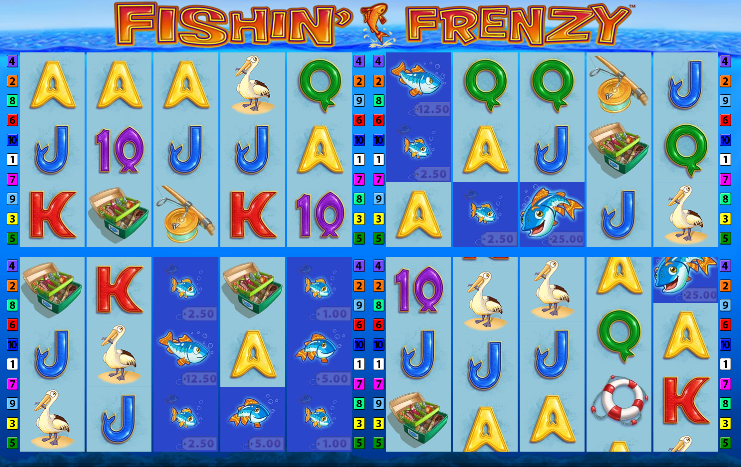
I have worked with the Fishin Frenzy series long enough to recognise when a new release is more than a cosmetic variation. Fishin Frenzy Power Play does not attempt to modernise the theme, exaggerate the bonus, or chase trends. Its change is quieter, but far more structural. It alters the way a single spin is experienced.
Traditional Fishin Frenzy is built around a single field of play. One set of reels, one narrative, one build-up at a time. Power Play breaks that format open. Every spin unfolds across four independent windows, each running its own logic, its own tension, and its own potential outcome. Instead of following one progression, the player is exposed to four simultaneous ones.
This shift immediately changes how the game feels. Waiting becomes different. Anticipation becomes distributed rather than focused. Where the classic format asks the player to endure quiet phases in exchange for occasional resolution, Power Play fills those quiet moments with parallel activity. Something is almost always happening somewhere on the screen.
It is important to be clear about what this does not mean. Power Play is not a shortcut to bigger wins, and it is not a softened version of the original. The core character of Fishin Frenzy remains intact. Value is still concentrated, bonuses are still selective, and the game still rewards patience more than impulse. What Power Play introduces is density, not generosity.
Four windows create four streams of information. Line hits, near misses, symbol clusters, and bonus signals appear more frequently simply because there are more places for them to appear. The player receives constant feedback, even when results remain modest. This feedback loop is what gives Power Play its distinctive rhythm.
From a session perspective, this version of Fishin Frenzy feels wider rather than deeper. You are not digging faster towards a bonus; you are scanning a broader field of possibilities. That distinction is subtle, but it defines the entire experience. Power Play is not about accelerating the game. It is about multiplying the surface area of engagement.
This is why it deserves to be approached as its own format. It takes a familiar system and reframes how that system communicates with the player. The mathematics stay disciplined. The presentation becomes layered. And the result is a slot that feels constantly alive without abandoning the restraint that made the series recognisable in the first place.
Slot Snapshot: Core Parameters Behind Power Play
Core parameters behind Power Play
A fast reference block for the format, stake scaling, and profile, so the behaviour analysis has a clean foundation.
At its foundation, Fishin Frenzy Power Play is defined by its multi-window structure. Each spin activates four separate reel sets simultaneously. Every window consists of five reels and ten paylines, operating independently but resolving together as part of a single action. One click produces four outcomes.
This structure has immediate implications for how the game should be understood. The total stake applied to a spin is not concentrated on one board, but distributed across all four. What appears to be a modest bet is, in reality, multiplied by the number of active windows. This is not hidden, but it is often underestimated by players who focus only on visual intensity rather than mechanical scale.
In terms of return and volatility, Power Play aligns closely with the wider Fishin Frenzy family. The return-to-player sits in the mid-ninety-six percent range, and volatility remains firmly high. This signals a familiar design philosophy: outcomes are not smoothed out, and value is not drip-fed. The game is built around accumulation followed by resolution.
Where Power Play diverges is not in its payout model, but in how often it speaks to the player during that accumulation. Four windows mean four chances per spin to display wins, partial setups, or symbolic hints of progression. These do not fundamentally alter expected value, but they dramatically increase perceived activity.
From a design standpoint, this creates an interesting tension. The game feels busy, yet it behaves with the same restraint as its single-window predecessors. This contrast is deliberate. Power Play does not try to make Fishin Frenzy easier. It makes it louder. More signals, more motion, more visual confirmation that the game is working through its cycles.
Understanding this snapshot is essential before moving into mechanics. The multi-window format, the multiplied stake structure, and the preserved volatility together explain why Power Play feels different without actually being different at its core. Everything that follows builds on this base: a disciplined slot system presented through a wider, more demanding interface.
In short, Power Play is not a new Fishin Frenzy. It is the same machine, observed from four angles at once.
Four Windows, One Spin: How Power Play Changes Game Rhythm
Why the spin feels busier, not faster
The tempo does not change. What changes is the amount of information that arrives after the spin: four windows settle in parallel, so your brain processes four outcomes inside the same moment.
What changes
The spin does not speed up. Power Play simply delivers multiple resolutions at the same time, which creates a denser stream of feedback inside a single spin cycle.
- Four windows settle together.
- Each window remains independent.
- More outcomes per spin increases perceived activity.
What does not change
A busier screen is not a faster game, and it is not a guaranteed improvement in results. The format increases information density, not certainty of reward.
- Tempo stays consistent.
- Variance still drives the session.
- Signals can appear without meaningful resolution.
How to read it
Treat each window as a separate channel. A strong-looking moment in one window should not be interpreted as progress for the entire screen.
- Scan for patterns, not single spins.
- Separate “noise” from “pressure”.
- Expect mixed outcomes on the same spin.
The most immediate and lasting effect of Power Play is not visual complexity, but rhythmic change. Four windows running at the same time alter how a spin is processed, both mechanically and psychologically. A single spin no longer represents a single outcome. It becomes a bundle of parallel resolutions that arrive together but mean different things.
In a classic single-screen slot, rhythm is linear. You spin, you wait, you evaluate, and you move on. Each result replaces the last. In Power Play, rhythm becomes layered. While one window resolves into a blank or a minor line hit, another may be building symbol tension, and a third may be edging closer to a bonus trigger. These narratives overlap instead of replacing each other.
This overlap creates a constant sense of motion. Even when the overall return of a spin is modest, the player rarely experiences a moment of complete inactivity. Something is always happening somewhere. This is not because the game is paying more, but because it is communicating more often.
However, this increased activity does not mean increased control. In fact, the opposite is often true. With four windows resolving simultaneously, attention is divided. The player is encouraged to scan rather than focus, to observe patterns rather than follow a single thread. This makes the game feel faster without actually speeding up the mechanics.
Over time, this rhythm produces a distinctive session texture. Quiet periods still exist, but they are fragmented. Instead of long stretches of nothing, the player experiences short bursts of minor events spread across the screen. These events keep engagement high while maintaining the same underlying discipline of the series.
Importantly, this rhythm also reshapes expectation. In a single-window format, anticipation builds toward one clear objective. In Power Play, anticipation is distributed. The player is often waiting for several things at once, none of which fully dominate attention. This can make bonuses feel both closer and more elusive at the same time.
The result is a slot that feels constantly active yet emotionally restrained. It avoids the extremes of boredom and overload by balancing them against each other. Power Play does not demand focus on every detail, but it rewards players who learn to read the broader flow rather than chasing individual moments.
This rhythmic shift is the foundation upon which all other Power Play mechanics operate. Without it, the multi-window format would be little more than a novelty. With it, the game develops a pacing that is recognisably Fishin Frenzy, but expressed through a much wider lens.
Local Bonus Triggers: Why Each Window Tells Its Own Story
Bonus pressure is local, not global
A simple split example: two scatters on one window do nothing, while three scatters on a different window can trigger the feature immediately.
One of the most misunderstood aspects of Power Play is how bonuses are triggered. The presence of four windows does not mean a shared bonus condition across the entire screen. Each window operates as its own system, with its own bonus threshold and its own progression.
This localised triggering is crucial. A bonus is activated when the required symbols land within a single window, not across all four. As a result, each window carries its own narrative tension. One may be completely cold, another may be hovering on the edge of activation, and a third may already be resetting after a failed attempt.
This design creates what can best be described as parallel pressure. Instead of one rising curve of anticipation, the player experiences several smaller ones at once. The game rarely presents a clear signal of when a bonus is imminent. Instead, it offers multiple partial signals, scattered across the screen.
This has a powerful effect on perception. Players often feel as though the game is constantly close to doing something significant, even when no bonus actually triggers. Near-miss moments occur more frequently simply because there are more opportunities for them to occur. The brain registers possibility even when probability remains unchanged.
Crucially, this does not make the game more generous. It makes it more suggestive. Power Play excels at presenting incomplete information. A pair of bonus symbols in one window, a promising symbol layout in another, and a minor win in a third can all occur on the same spin. None of these guarantee progression, but together they create a strong impression of momentum.
Over longer sessions, this structure teaches the player a specific lesson. No single window should be treated as the centre of the experience. Attention shifts constantly, and commitment to any one narrative is often premature. Bonuses arrive when they arrive, and their timing is rarely foreshadowed cleanly.
This is where Power Play diverges most sharply from more transparent slot designs. It does not clearly signal its intentions. Instead, it surrounds the player with fragments of possibility. Understanding this helps explain why some sessions feel intense without delivering significant resolution, while others resolve suddenly and without warning.
Local bonus triggers are not a complication for their own sake. They are the mechanism that allows Power Play to maintain high visual engagement while preserving the series’ traditional restraint. Each window tells its own story, and the player’s experience emerges from the intersection of all four, not from any single one dominating the screen.
Free Games vs Super Games: Two Different Ways the Bonus Resolves
Free Games vs Super Games
When a bonus finally activates in Fishin Frenzy Power Play, the game does not simply move into a single predefined mode. Instead, it offers two distinct bonus structures that resolve tension in very different ways. Free Games and Super Games are often grouped together in casual descriptions, but in practice they represent two separate philosophies of resolution.
Free Games are the more focused of the two. The bonus is confined to a single window, narrowing the player’s attention after a long period of distributed activity. This contraction is deliberate. After managing four parallel fields, the game suddenly asks the player to concentrate on one. The visual noise drops, and every symbol becomes easier to track.
This focus changes how the bonus feels. Outcomes are clearer, sequences are easier to follow, and the relationship between symbol appearance and payout becomes more transparent. Free Games reward observation rather than scanning. They are about reading the board and recognising when the necessary components align.
Super Games take the opposite approach. Instead of narrowing the field, they expand it. All four windows remain active, and the bonus logic is applied across the entire layout. The result is not necessarily a higher frequency of wins, but a broader canvas for potential resolution.
This expansion increases complexity. With four windows active, it becomes harder to follow individual interactions, but the sense of scale is amplified. Events feel larger, not because they occur more often, but because they occupy more space. Super Games are about reach rather than clarity.
The key distinction between these two bonus types is not value, but behaviour. Free Games emphasise precision. Super Games emphasise coverage. One concentrates the experience; the other distributes it. Neither is inherently superior. They simply resolve the same accumulated tension through different structural lenses.
Understanding this distinction is essential for interpreting bonus performance. A quiet Free Games session may feel disappointing due to its clarity, while a visually busy Super Games session may feel exciting despite producing similar results. Power Play allows both experiences to exist without forcing one to dominate the identity of the slot.
The Fisherman Mechanic: From Wild Symbol to Collection State

At the heart of Fishin Frenzy Power Play lies a mechanic that is often simplified too far in casual discussion. The Fisherman is not merely a wild symbol in the traditional sense. Within the bonus, it functions as a collection state that defines when and how value is released.
Fish symbols act as stored potential. They represent individual prize amounts, but on their own they do nothing. They sit on the reels as unresolved value, waiting for the correct condition to activate them. That condition is the appearance of the Fisherman.
When the Fisherman appears, it does not substitute for other symbols or complete lines. Instead, it triggers a collection event. Every visible fish symbol becomes active, and their values are gathered at once. The payout is not driven by alignment, but by coincidence.
This distinction explains much of the volatility associated with the bonus. Several spins can pass with fish symbols accumulating across the reels, creating visual promise without immediate reward. The game is not failing to pay. It is delaying resolution until the correct state is reached.
When that state arrives, the outcome can be abrupt. A single spin can resolve multiple stored values simultaneously, producing a result that feels sudden and disproportionate to the apparent simplicity of the trigger. This is not randomness layered on top of randomness. It is a controlled release mechanism.
In Power Play, this mechanic becomes more pronounced due to the multi-window format. Fish symbols may appear across different windows, and the Fisherman’s arrival can activate collections in more than one place at the same time. The system scales naturally without changing its rules.
Understanding the Fisherman as a collection trigger rather than a standard wild reframes the entire bonus. It is not about chasing the symbol itself, but about recognising when the board is primed for resolution. Until that moment, activity remains potential rather than outcome.
This mechanic encapsulates the design philosophy of Power Play. The game does not rush to reward movement. It waits for alignment. And when alignment occurs, it resolves decisively, without drama, and without apology.
Event Density vs Real Outcomes: Why Power Play Feels So Active
Event density versus real outcomes
Concept graphic (not statistics): Power Play can produce high on-screen activity while keeping payout resolution controlled.
One of the defining characteristics of Fishin Frenzy Power Play is how active it feels, even during sessions that deliver relatively modest results. This sensation is not accidental, and it is not the product of hidden generosity. It is the direct outcome of increased event density.
Event density refers to how often the game produces something for the player to process. In Power Play, four windows dramatically increase the number of visible events per spin. Line hits, symbol interactions, partial setups, and near-bonus states occur more frequently simply because the game has more space to generate them.
What is important to understand is that these events are informational, not necessarily profitable. They keep the player engaged, alert, and involved, but they do not automatically translate into stronger outcomes. The slot communicates constantly, even when it is withholding resolution.
This is where perception and reality diverge. A session filled with motion can feel productive, even when returns remain flat. Power Play is particularly effective at sustaining this illusion of momentum. The player is rarely left staring at an empty screen. There is always something to acknowledge, something to consider, something to anticipate.
At the same time, the underlying payout structure remains conservative. Bonuses are still selective. Major outcomes are still tied to specific states rather than general activity. The game does not reward attention; it rewards alignment.
This balance is deliberate. By increasing event density without inflating payouts, Power Play maintains the identity of Fishin Frenzy while modernising its presentation. It feels contemporary without becoming indulgent. It keeps the player busy without becoming misleading.
For experienced players, recognising this distinction is crucial. High activity should not be mistaken for progress. The game is not building toward a result just because it appears busy. It is cycling through possibilities, many of which will dissolve without consequence.
Understanding event density allows the player to remain grounded. It helps separate emotional engagement from mechanical reality. Power Play is loud, but it is not reckless. Its outcomes remain disciplined, even when its presentation suggests constant movement.
Playing the Demo Smart: How to Read a Power Play Session
Approaching Fishin Frenzy Power Play in demo mode requires a slightly different mindset than a traditional single-screen slot. The temptation is to try to follow everything at once, but that quickly leads to overload. The game is not designed to be read in detail on every spin.
The most effective way to engage with a Power Play session is to think in phases rather than moments. Individual spins matter less than patterns over time. Which windows consistently show bonus symbols? Which tend to remain quiet? How often does visual pressure build without resolution?
Rather than tracking each window equally, attention naturally shifts. This is not a failure of focus, but part of the intended experience. Power Play encourages scanning. The player learns to register signals without attaching too much meaning to any single one.
In demo play, this approach is especially valuable. Without financial pressure, the player can observe how often the game presents near-bonus situations, how frequently the Fisherman appears in relation to fish symbols, and how quickly tension resets after a failed attempt. These observations reveal more about the game than any isolated win or loss.
It is also useful to accept that not every session will resolve cleanly. Power Play often ends periods of high activity without a clear payoff. This is not an anomaly. It is a feature of how local triggers and distributed attention interact. Bonuses may arrive suddenly, without a long build, or not at all.
Playing the demo smart means resisting the urge to chase patterns that feel meaningful but are structurally incidental. The game does not remember partial progress across windows. Each window operates independently, and perceived momentum can vanish without warning.
Ultimately, demo mode is best used as a way to understand rhythm rather than results. Power Play reveals itself over time. The more spins observed, the clearer its structure becomes. Not as a promise of outcome, but as a system with its own internal logic and limits.
FAQ: Fishin Frenzy Power Play in Brief
FAQ: Fishin Frenzy Power Play in Brief
Tap a question to reveal the answer directly underneath.
Understanding What Power Play Really Offers
Fishin Frenzy Power Play is best understood as a structural experiment rather than a promise of improvement. It does not aim to outperform the original game in terms of payouts, nor does it attempt to simplify its volatility. Instead, it asks a different question: how does the same system behave when its signals are multiplied?
By spreading the experience across four windows, Power Play reshapes perception. The player receives more feedback, more motion, and more simultaneous outcomes, but none of these alter the core discipline of the game. Value remains concentrated. Resolution remains selective. The slot does not bend to impatience.
This makes Power Play a game of interpretation. Players who are comfortable reading flow rather than chasing individual spins will find depth in its layered structure. Those who rely on clear progression and visible build-ups may find the experience fragmented. Neither reaction is incorrect. The format simply favours a different way of engaging.
What Power Play does particularly well is expose the mechanics of anticipation. It shows how easily activity can be mistaken for momentum, and how visual intensity can coexist with controlled outcomes. In this sense, it is an honest slot. It does not disguise its volatility, and it does not artificially smooth its cycles.
For demo players, this version offers a valuable perspective on the Fishin Frenzy formula. It reveals how much of the experience is shaped by presentation rather than probability. For real play, it demands awareness of stake structure and patience with distributed outcomes.
Ultimately, Fishin Frenzy Power Play is not about doing more with less. It is about doing the same thing in a broader space. It keeps the character of the series intact while inviting the player to engage with it from multiple angles at once.
If you value clarity, restraint, and single-threaded focus, the original format remains unmatched. If you prefer layered information, constant motion, and parallel tension, Power Play offers a refined alternative. It does not replace Fishin Frenzy. It reframes it.